Another feature of... |
|
Another feature of... |
|
|
|
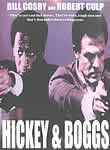
Consumer Warning: Just to let people know, the DVD for Hickey & Boggs is one of the worst I’ve ever seen. The film is quite evidently severely cropped, and the picture quality is dreadfully grainy. Basically, it looks like an inferior bootlegged VHS tape. At one point, the picture actually starts jumping! Really, the fact that anyone would market this disc, much less have the balls to list price it at $20, is astounding.
Back in 1965, a superior globetrotting espionage program called I Spy became the first network program to feature a black actor in a co-starring dramatic role. That actor was a then relatively unknown Bill Cosby. Cosby was so good in the role of Alexander Scott that he won the Best Actor Emmy all three years the show was on. (In doing so, he also beat his co-star, Robert Culp, for the statuette all three times.) To get an idea of how unusual the situation was, you have to watch the program’s opening credit sequence—many episodes are available on DVD, happily enough—and see how they play the program as starring Culp and featuring Cosby in a sidekick role. Nothing could be further from the truth, however. Culp and Cosby were costars in the truest sense, and few series in TV history have relied so equally on two different protagonists. Whether Cosby in fact deserved to beat Culp all three times—and I suspect he garnered at least some votes because having a black actor win the award made the TV community look all progressive and stuff—is open to debate. However, in any case it was Cosby’s career that took off afterward. First came the comedy series The Bill Cosby Show, followed by the long-running adventures of Fat Albert. Meanwhile, he starred in a number of theatrical films, including Uptown Saturday Night, Let’s Do It Again and Mother, Jugs and Speed. He had two goes at the inevitable variety show format, with The New Bill Cosby Show and Cos. Cosby finally hit pay dirt with the 1984 premiere of The Cosby Show, a monstrously popular series that many at the time thought had saved the then moribund sitcom from extinction. However, theatrical success proved rather more elusive, and he more or less gave up on it after starring in two infamous bombs, Ghost Dad and Leonard Part 6. He subsequently has headlined two more series, The Cosby Mysteries and Cosby. Meanwhile, he has been and remains a spectacularly successful stand up comedian. I urge anyone out there to dig out his incredibly funny old comedy albums, including "Wonderfulness"—which includes the classic "Chicken Heart" routine—"Billy Cosby is a Very Funny Fellow, Right" and "Why Is There Air?" Oh, and dig out Bob Newhart’s albums while you’re at it. Killer stuff. Anyhoo, Culp’s career never hit his I Spy heights again. He tried his hand at directing with our current subject, but never got the chance at a theatrical again. He continued to act in films ranging from the period curio Bob & Ted & Carol & Alice and the grossly pretentious art / horror flick A Name for Evil. Oddly, his greatest success during the ‘70s might have been in thrice playing murderers in some of the more memorable Columbo episodes. He also made some interesting TV movies, including A Cold Night’s Death and Spectre, a failed pilot for a series revolving around an investigator of the paranormal. By the end of the decade he was in a slump, appearing in the pilot for the malodorous Mrs. Columbo TV show (aka Kate Columbo, aka Kate Loves a Mystery, aka Kate the Detective), as well as the moronic Susan Anton theatrical vehicle Golden Girl. He finally refreshed his ‘Q’ rating by costarring on The Greatest American Hero. Since then, despite generally appearing in obscurities and outright dreck such as Turk 182!, Culp has maintained at least a busy acting career. His highest profile role of late has probably been as Ray Romano’s father-in-law on Everyone Loves Raymond. Meanwhile, he and Cosby have apparently remained friendly. Cosby costarred in Culp directorial debut Hickey and Boggs, and Culp guest starred on an episode of The Cosby Show, and the two reunited for 1994’s I Spy Returns. (Damn, that was broadcast ten years ago?!) In any case, Hickey and Boggs was Culp’s attempt to forge a screen career both as and actor and a director. I’m not sure if the project came about because he and Cosby wanted to work together again, or if Cosby came aboard after things were up and running. However, chances are that many of the duo’s fans were shocked by the dark film they made together. I Spy had its dramatic side, and indeed was at times quite serious indeed. However, what most people remember from it was Cosby and Culp’s utterly convincing and quip-filled camaraderie. That element is present here, but one doubts many came to the theatrical expecting such a fatalistic film as this turns out to be. Cosby is Hickey, Culp is Boggs, private eyes. If they were down at the heel it would represent an improvement. The two are aging, increasingly uninterested in their work, have problematic personal lives, and are generally destitute. I can’t remember a film in which the heroes drove such old clunkers. Also, Boggs in particular has a drinking problem, and is given to seeking his comfort in the arms of, er, professional caregivers. After we watch several seemingly unconnected events, including a murder, the two are hired to find a man’s wife. In the course of their investigation several other people die, and the pair have a close run-in with some murderous goons. Eventually they learn about the film’s McGuffin, a suitcase full of cash from a bank robbery that occurred some years ago. The wife of the guy that stole it is trying to fence the money before her husband finishes a prison sentence. However, the mob wants the money, too. Meanwhile, Hickey and Boggs want the $25,000 recovery fee. Since they end up following many of the same leads as the mob goons, the two often end up at the scene of some crime. This gets the police on their tail, who are none too happy to keep seeing these guys pop up at one murder scene after another. As if this all weren’t enough of a headache, Hickey is trying to get back together with his estranged wife Nyona and their daughter. Nyona’s not taking very much of what he’s selling, however. This is a dark and downbeat film. Our Heroes, such as they are, are at best dogged, at worst just tired and a touch immoral. No one is redeemed at the end, and those who aren’t dead—and there aren’t many such—don’t exactly go walking off into a bright new dawn. Meanwhile, the boss bad guy is one of the few people to walk away from everything. (Setting up a sequel, maybe?) Hickey and Boggs certainly aren’t superheroes. At one point they hide from and then flee the goons, in the midst of which Boggs bangs his leg up. The result is a limp he carries for the next several scenes. And while ex-cop Hickey is a decent shot with his long-barrel .38, Hickey can’t hit a damn thing with his cannon-like .44 magnum. "I’ve got to get a bigger gun," he sighs at one point, as if that’s the problem. Hickey & Boggs is, I must report, a sort of middling movie. It’s watchable, but that’s about the best I can say for it. The most interesting aspect is a veritable parade of then unknown actors. Bill Hickman from The French Connection and Vincent Gardenia were already fairly well known by the time they appeared here, but if you keep your eyes open you’ll spot such future luminaries as Michael Moriarty, Isabel ‘Weezy’ Sandford, Ed Lauter and James Woods. Moreover, this is was the first produced script from prolific screenwriter Walter Hill. He scored a much hit that same year, however, by penning Sam Peckinpah’s The Getaway, and graduated to directing with 1974’s Hard Times, which remains probably Charles Bronson’s best starring film. I can’t say this represents his best work, and one wonders whether Culp and Cosby rewrote much of his dialogue to match their pre-established personas better. One of the film’s odder aspects is that it seems to ape several elements from the previous year’s Dirty Harry. Aside from little things like Boggs and Hickey stopping at small neighborhood places to grab a hot dog for lunch, there’s also an action sequence that takes place in an empty professional football stadium. This, like a similar scene in Dirty Harry, involves gunplay, and during this the injured Boggs limps around much like the wounded Scorpio. As well, Boggs’ weapon of choice is the same .44 magnum revolver (a Model 29 Smith & Wesson) that Harry famously packs. In any case, the rather more elaborate stadium gunfight here is the film’s action highlight. This film comes close to being pretty good, and one wonders whether they’d have gotten it right had a sequel been financially justified. However, as it stands the film remains only a mildly entertaining curiosity. Ken’s Rating: 5 out of 10. (DVD Rating: 1 out of 10.)
The Worst Movies Ever Made
(2004)
One limitation of such a list is that you want it to be fun, meaning that you want a range of several kind of films. After all, putting fifty schlocky ‘50s sci-fi movies would be boring. On this front, they did a pretty good job, if not a great one. They also managed to get clips for all their selections, probably without permission (i.e., under the Fair Use act). I also liked the fact that there were several movies here I haven’t seen yet. Yep, there’s still ground to cover, even for guys like me. The format of the show is to merely run down the films from #50 down to the single worst. Short clips of the movies are shown, accompanied by amusing comments by a bombastic narrator. (Again, they cover 50 movies in under an hour.) The narration is actually pretty amusing. There’s also a nifty bit of animation featuring irate movie patrons throwing things at a cinema screen. However, this appears between every frickin’ movie, and once you’ve seen it thirty odd times, the novelty value has worn off. Note: I was going
to number each individual movie, starting with #50 on down, but friggin’
Microsoft Word kept screwing around with the formatting as it tried to save
me the trouble. So I’ll run down the titles in sections of fives. 50-46 Glen of Glenda.
Some champion this film, but I think it’s a reasonable offering. I’ll go
with this one.
45-41 Voodoo Woman:
Hmm, too generic. There are dozens of ‘50s schlock flicks as bad or worse
than this. (For instance, From
Hell It Came shockingly is passed over entirely.) By the way, they
are now tilting way too heavily towards black & white genre films of the
‘50s, which account for four of the first six movies. Santa Claus Conquers the Martians: This makes the list, and Santa Claus doesn’t? I can’t agree with that. Heck, it’s not even Pia Zadora’s last movie. Don’t get me wrong, this film’s a blast, but its no Santa Claus.
40-36 Howard the Duck:
I have a shocking admission: I’ve never seen this film. However, the clips
look hideous, especially the scene where Howard is staring at Lea Thompson’s
panty-clad ass, and then it looks like they have sex. This is true to the
comics, I know, but film is so much more literal. Eee-yuck.
35-31 Hillbillies in a Haunted House:
This has its moments, but its too dull to be what a ‘worst film’
nomination is supposed to represent. Unless you’re nominating a film for
its epic boredom, in which case this isn’t even in the running against
stuff like Jonathan Livingston Seagull.
30-26 Dracula
vs. Frankenstein: Dead on. Given personal
tastes, this could be moved up or down I bit, but I have no problem with it’s
placement here.
25-21 Wild Women of Wongo:
Sorry, bad but not nearly ’50 worst’ material. Possibly chosen because
of a bias towards wacky titles.
Snow White (1955 German version):
I haven’t seen it, but I’m willing to assume this is awful. However, let
me nominate instead some other foreign fairy tale movies. The Mexican studio
that made The Brainiac and the Aztec Mummy flicks also produced a
hallucinogenic Puss in Boots adaptation, as well as a whole series of
riotous Little Red Riding Hood flicks. See also the similarly insane Russian
Seven Dwarves to the Rescue.
15-11 Spider-Baby:
Wow! This Jack Hill black comic cult classic is even a more off-base pick
than Swinging Cheerleaders. Easily the worst pick on this list. Trog: An amusing
trifle that marked the end of Joan Crawford’s career. How about Mommy,
Dearest instead? Or if you want a horrible ‘golden era movie star’s
last role, in a moronic, cheap monster movie," than I really have to
nominate Ray Milland's justifiably ornery turn in the hilarious Italian
misfire The Sea Serpent. The Crawling Hand:
Again, generic bad sci-fi stuff. And top ten material? Please. It’s not
even Alan Hale’s worst sci-fi movie. The Giant Spider Invasion is
much worse.
Great White:
Jaws rip-off so derivative that Universal successfully sued to keep
it from being shown in this country. When you think of how many other movies
have slavishly aped Jaws, you get some idea of how much of a copy
this one is. The only problem is that there are many, many worse Jaws
knock-offs than this. On the whole, this is a really fun little feature. The fact they got clips for each movie was impressive. Since it sells for about six or seven bucks, I’ll probably pick up a copy. Hmm, maybe the B-Masters should all produce their own versions… Ken’s Rating: 8 out of 10.
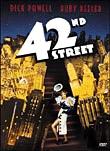
While 42nd Street is probably the earliest great movie musical, it’s not constructed along the genre’s classic lines. First, it’s of the ‘realist’ school, wherein the characters only break into song for outwardly logical reasons (i.e., they’re appearing in a Broadway show). Second, while they are a couple of songs sung during the main part of the film, in the guise of rehearsals, the bulk of the picture’s musical content is a twenty-minute string of numbers that represent the film’s climax. We open with a montage of 42nd St. street signs (representing New York City’s theatrical district), followed by a second montage of various folks as they excitedly spread the word that producers "Jones and Barry are doing a show!" And indeed they are, one entitled Pretty Lady. In fact, they’ve just signed star Dorothy Brock (Bebe Daniels) to appear in the show. The film takes place but a few years after the Great Depression, however. Even more than usual, funding is hard to come by. Therefore the producers and Brock are working to reel in a sugar daddy investor, kiddie car magnet Abner Dillon. Dillon, a bluff overfed hick, obviously expects some, er, personal attention in return for his investment. Dorothy expertly deflects his attentions, but only temporarily. You can see that she’s been in this situation before, and isn’t very happy about it. Moreover, we eventually learn that she is secretly carrying on with her old dance partner, Pat Denning. If Dillon should find out that she’s seeing another man, he’d pull his money out of the production. In the end, hoods will be set on Denning to motivate him into getting out of town. At an economical 89 minutes, this is a short, quickly paced flick. Again, however, it didn’t win any awards for original or offbeat characterization. In these first few minutes we’ve now met the cynical, savvy producers; the horny, overfed and somewhat dense hick who’s eager to get some skirt and experience some of the glamour of show biz, and the haughty, sophisticated star who still has to pander to a rich yahoo. Having bagged their funds and star, Jones and Barry move to sign legendary director Julian Marsh (Warner Baxter). Again, Marsh is an archetypical character, and they sketch in his characteristics with brisk efficiency: He’s been a veritable hit machine, is highly strung, and has a reputation of being a martinet. Moreover, he’s desperate. Marsh lost all his money in the stock market crash, and desperately needs another hit. The proceeds from that one, he swears, he’ll sock away. Things are even direr than that, however. The stress of running shows has all but ruined his health. In an almost comical example of cut-to-the-chase scripting, he actually takes a hectoring phone call from his doctor during his meeting Jones and Barry (!!), thus establishing what bad shape he’s in. The producers, obviously, greet this news with some wariness, but Marsh insists that they can count on him. He needs Pretty Lady to be a hit even more than they do, as he intends it to be his last show. Soon the show is being prepped, and we meet a second set of characters. Among the hordes of dancers and chorines attempting to get a job, there’re jaded pros Lorraine (Una Merkel) and Annie (Ginger Rogers!). Then there’s Marsh’s right hand man, floor manager Andy Lee (George E. Stone, of the Boston Blackie movie series). The film’s main character, however, is naïve young newcomer Peggy Sawyer (Ruby Keeler). Generally garnering sneers, not to mention hostility, from her more experienced but also older competitors, she manages to get a spot through luck. As a gag, she’s sent to barge in on the dressing room of the show’s ‘juvenile’ lead—sort of a male ingénue—Billy Lawyer (Dick Powell, playing someone who’s career basically mirrored his own). Following this early example of the Meet Cute, Billy quickly develops a crush on Peggy, and does what he can to help her out. More importantly, Lorraine and Annie take the newcomer under their wing, and Lorraine uses her pull with Andy to get Peggy past the first cut. Despite this, Peggy is eventually culled. However, when the production accidentally ends up short one dancer, and an exhausted Peggy is found sleeping in the wings, she gets the gig. Following various rehearsal sequences—Marsh has but five weeks to get the show running from scratch—and several romantic complications, the production is finally ready for its premiere. In the film’s famous (and much imitated and parodied) set-up, Dorothy busts her ankle the night before. Peggy, of course, in unexpectedly tapped by the desperate Marsh to take the spotlight. After a ludicrously short afternoon of rehearsals, he prepares to send her out before the audience. "You’re going out a youngster," he tells her in one of the all-time classic movie lines, "but you’ve got to come back a star!" (As a show biz line, that wasn’t matched until a parody of 42nd Street that made up half of the 1978 spoof Movie, Movie. George C. Scott, playing a Marsh-like director who dies as his final production is greeted as a smash success, is eulogized by his doctor, Art Carney. "One minute you’re standing in the wings," he muses, "and the next minute you’re wearing them.") 42nd Street continues to entertain seven decades later. Admittedly, some elements, especially the acting, have dated very badly. However, despite the fact that the script is a veritable compilation of show biz clichés, these remain, as clichés often do, largely true. If Peggy proves talented enough to carry the show, she only gets the chance to prove it because of a series of lucky breaks. Meanwhile, Marsh calls on gangsters he knows when Pat Denning threatens his production. Show business types always have hung out with thugs and gangsters, and continue doing so today. The chaos of such a production is also effectively communicated when, after wasting a lot of precious time on a musical number that just isn’t working, March disgustedly realizes that it will have to be abandoned. The aspect that tends to amaze the film’s first-time viewers is how sexually frank (if not explicit) it is. This is because it was made before the Production Code was fully up and running. Back in those days, each state, and even some cities, had separate censor boards. The only way to keep from having recut every film for zillions of different territories was for the studios to themselves adopt a set of stringent content guidelines. These went into effect shortly after 42nd Street was released. Although the film was massively successful, they were never able to put it into re-release in the following decades, because it didn’t pass Production Code muster. In any case, the film is saturated with sex. Dillon looks on lasciviously as the prospective dancers are asked to hike up their skirts so that Marsh and Andy can examine their legs. Annie, meanwhile, is known as ‘Anytime Annie,’ and it’s not because she’s perennially ready to play Scrabble. "She only said ‘no’ once," one observer japes, "and then she didn’t hear the question." Meanwhile, Lorraine secures her spot (and Peggy’s) by dint of a previous liaison with show runner Andy. He groans when he sees her—perhaps he was hoping for a fresh relationship—but apparently they have too much of a history for him to blow her off. She’ll be his girl during the show, and he’ll see she gets cast. Even Peggy, although retaining (we assume) her virtue, dates three different guys during the course of the film, at least one of whom basically just wants to get into her skirt. Meanwhile, there’s a gag scene after Pat gets beaten up by the aforementioned hoods. She takes him to her rented room to recover, whereupon her landlady barges in, assuming the worst. As she lectures the innocent Peggy, a door behind her opens, and we see another girl sneaking a lover out of her own room. The most shocking moment, however, is when an annoyed girl jumps off a horny guy’s lap and complains about being a "flagpole sitter." (!!) Man, I couldn’t believe I’d heard that one. 42nd Street remains most famous for its dance sequences, which were designed by legendary choreographer Busby Berkeley. As usual with Berkley’s work, the conceit that the numbers are designed for a stage production is self-evidentially artificial. Instead, much of the action, with the dancers moving their limbs in elaborate and synchronized kaleidoscope-like patterns, are patently designed to be viewed from directly overhead, an impossible angle in a theater. Also along these lines, while Peggy sings in a somewhat reedy fashion, Marsh never attempts to get her to project her voice more forcefully, as anyone in a theatrical production must do. Indeed, the show’s singers pitch their voices at a level obviously appropriate for a nearby microphone, instead of for the patrons out in the cheap seats. The direction by Lloyd Bacon is crisply proficient. Like the script, it’s largely designed to keep things moving. The cast is generally good, if stylized in the manner of the time. I especially liked Warner Baxter as the brusque but passionate Marsh. Guy Kibbee plays sugar daddy Dillon a bit broadly, but that’s what the role called for. Again, subtlety of characterization isn’t the film’s hallmark. Ginger Rogers and Una Merkle perform their sarcastic comic relief roles well, playing characters in situations they probably had experienced in their own careers. I’d say the two female leads are the most problematic. Bebe Daniels acts a bit broadly, as if she really were stage acting, and doesn’t exactly convince with her "the show must go on" conversion as she suddenly elects to support Peggy in replacing her. Her ‘buck up, kid, you’re gonna be great’ speech is pretty obviously just that, a speech, and I didn’t feel Daniels successfully sold her character’s ambivalence, summed up when she orders Peggy to "Go out there and be so swell that you'll make me hate you!" Moreover, and at the risk of getting hate mail from the movie’s numerous hardcore fans, I found Ruby Keeler (i.e., Mrs. Al Jolson, the star of the first talkie, The Jazz Singer) to be the cast’s weak link. Her acting isn’t laughable, but she apparently imprinted on the idea that innocents are ‘wide-eyed.’ I guess ‘callow’ would best sum up my take on her performance. Moreover, she frankly doesn’t have that great of a singing voice, and in one of her dance numbers looks nothing less than clunky. Dick Powell remains known for his increasing impatience in playing lightweight juvenile leads in a long succession of films like this one. Finally, after dozens of such roles, he took things into his own hands by getting himself cast as Raymond Chandler’s wise-cracking, hardboiled private eye Philip Marlowe in the 1944 Noir classic Murder, My Sweet. The success of that picture abruptly changed his screen image, and afterward he would play tough guy roles that were the mirror opposite of his earlier parts. Powell also tried his hand at directing a handful of times. His best film remains the nifty 1957 WWII Naval war picture The Enemy Below, in which destroyer captain Robert Mitchum conducts a cat and mouse pursuit of wily German U-boat captain Curt Jurgens. Shortly before that, however, Powell directed the infamous Howard Hughes production The Conqueror, in which an epically miscast John Wayne attempted to play Genghis Khan (!). Aside from being a hideously bad movie, the film was shot on desert locations near the Manhattan Project’s atomic testing grounds. In the decades to come, scads of people associated with the picture, including Wayne and Powell, would die of cancer. Ken’s Rating: 7 of 10.
Sealab 2021 is part of the Cartoon Network’s omnibus Adult Swim series. Another such show, Aqua Teen Hunger Force—a very strange, rambling series about a sentient milk shake, meatball and container of fries who are housemates that I personally found only intermittingly funny—had earlier came out on disc. It apparently sold well enough that a second set of episodes is due, along with other Adult Swim features such as our current subject. Sealab 2021 takes animation from the 1972 Hanna-Barbera eco-toon snooze Sealab 2020, reworks it with new backgrounds and such, and dubs in wacky dialog. (In this it’s like the Space Ghost Coast to Coast show.) Each segment runs about 11 minutes, a good length since it means that individual episodes won’t wear out their welcome. A two-disc set of the first 13 episodes was just released this week. I was, for whatever reason, impatient to get a look at it. Therefore I rented the second disc first, as it was available for immediate shipping. I figured that continuity would not really be an issue, except, perhaps, in terms of running gags. The title pretty sets the show up. The locale is an underwater research facility, and the cast is the facility’s crew. The main characters featured in these five episodes include:
As seems to be typical of Adult Swim shows, the comedy here is of the absurdist vein. Perhaps the earlier episodes (which featured the show’s first eight segments) tended more towards parody of the cartoon from which it was derived—although probably not—but the offerings on the second disc are largely just a ‘whatever comes into our heads’ sort of thing. I knew I’d like the show in the middle of the first cartoon. (This was fairly impressive, as I didn’t have any introduction to who the characters were or whatnot). This revolved around Captain Murphy, who ends up trapped under a toppled soda machine. Lamentably for him, this occurs just when everyone else on the base decides to take off for a year to work for a rock band. The first gag that made me laugh involved the numerous Jazz-related sodas the vending machine offered, including John Cola-trane and Fizzy Gillespie. (It also robotically ‘speaks’ to consumers via horribly atonal take-offs of Louie Armstrong songs.) One advantage of DVD is that you can freeze frame the image to read all the different flavors as they whip by. However, the moment I was really won over involved the pinned Murphy, who after mourning his crushed torso, attempts to buck himself up by noting, "C’mon, Murphy, you’ve been in tighter scrapes than this." Of course, you know something else is coming after a statement like that. However, when a rather incongruous scorpion (!) immediately came skittering into shot, I knew I’d be pretty happy with things. After becoming addicted to the scorpion’s toxins over the course of several months, Murphy develops a surprisingly close relationship with the errant arachnid. This serves him well—sorta—given his concurrent feud with a small housecleaning robot. The wrap-up gag is pretty lame, but then that’s the hardest part of any comedy sketch. The second episode involves Murphy’s hiring the dubiously credentialed Master Loo to improve Sealab’s Feng Shui. Sadly, Loo seems more interested in soaking up as gargantuan a fee as possible than with making sure that essential services, like the air recyclers, remain operational. In his spare time, he sells all the other crewmembers gift store Japanese artifacts. The main gag is that Loo is an obvious con artist—for instance, he noticeably mispronounces the term ‘Feng Shui’ (which is also spoken differently by each character)—and that Murphy is too dumb to notice. As always, though, the funniest gags are the incidental ones. A highpoint followed Loo Feng Shui-ing Murphy’s personal lavatory with a solid gold toilet, which surrounded by the most cliché collection of ‘Japanese’ decorative accessories imaginable. (And yes, the fact that ‘Feng Shui’ is in fact a Chinese discipline is another aspect of the joke.) The episode ends, as it would almost have to, with a martial arts battle. This leads into a surprise cameo by some fellow Cartoon Network characters. Next up is an extended riff on the stateroom scene from A Night at the Opera. Here we open on Murphy (who’s trying to make time with a bucket adorned with a mop hairdo and sloppily painted face) and Marco in a storeroom. They’ve been trapped there for three days, as the door mechanism is busted and they can’t get out. Soon most of the show’s other characters make their way inside and find themselves in the same fix, at least partially due to everyone’s predilection to punching each other at the slightest provocation. The next show follows capitalist Sparks as he decides to sell Stimutacs, a self-created "herbal supplement," to his crewmates. This grants them all a feeling of tremendous well-being, and eventually some fairly amazing mental and physical abilities, but in the end they all become addicted zombies. As usual, only brainiac Quinn remains suspicious of Spark’s merchandise. (Oh, and trivia fans will note a return appearance by the wrench from the soda machine episode.) The show ends with most everyone’s death, which I assume has happened more than once. The last episode breaks the fourth wall as we watch the ‘actors,’ director and crew working on a set as they attempt to ‘film’ an episode of the show. Everyone, including costar Estrada, ends up angry at Harry ‘Hal’ Goz, or at least the cartoon version of the actual guy who voices Murph (and whose alter ego proves as dimwitted as his alter ego’s character). Annoyed, Estrada goes back to his personal trailer to play a C*H*i*Ps video game (!), while Goz bitterly complains about his own lack of amenities. Meanwhile, the actor who plays Quinn is annoyed to learn that his character has been recast as an alien solider, ala Stargate SG-1, complete with metal armor suit and pointed laser staff. ("A spear?!" he yells. "You’re giving me a spear?!") "The writers were having trouble writing for, uh, ‘urban’ characters," the director explains. Part of Quinn’s new persona involves speaking black street slang with a reverb effect. Meanwhile, Debbie’s portrayer is bitching about the fact that her character’s action figure wears a bikini instead of the show’s standard orange jumpsuit. Apparently there have been around forty 11-minute episodes of the show, as opposed to a mere half-hour 13 episodes of the original Sealab 2020. In addition, additional episodes are due to be broadcast later this year. In the meantime, two further sets of Sealab 2021 DVDs have been scheduled for release this winter and then next spring. It should be noted that in Episode 33, the series discontinued the character of Murphy after voice actor Harry Goz passed away. From fan comments I’ve seen on the Internet, apparently most of the show’s fans feel the series never recovered from this. Ken’s Rating: 7 out of 10.
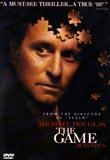
This has been lurking in my queue for a while, as I hadn’t caught in during its theatrical run. I like a well-constructed suspense movie, as well as ones involving protagonists who half to figure out who’s out to get them. Of course, so do a lot of other people. That’s why they keep making movies ranging from North by Northwest and 3 Days of the Condor (great) to Enemy of the State and The Net (dumb). Nicholas Van Orton is an utterly off-the-rack movie investment banker shark, and thus played, of course, by Michael Douglas. He’s all cold and distant and cares more about money than people and blah blah. He lives a life surrounded by incredible, almost unnerving opulence—probably much like Michael Douglas does in real life. His great wealth hasn’t brought him happiness, however—probably much unlike Michael Douglas in real life. While a young child his father committed suicide by jumping off the roof of the family mansion. His reasons for doing so remain unexplained, and his death is a wound from which Nicholas has yet to recover. At this point Nicholas lives alone in the same gigantic edifice, which is an effective, if obvious, symbol of his emotional isolation. He has, of course, kept these issues semi-buried by throwing himself completely into his work. However, his 48th birthday is approaching, which is the age at which his dad kacked himself, and brings things close to the surface. Then he hears from his screw-up younger brother, Conrad (Sean Penn). They lunch together and exchange the requisite number of black sheep / white sheep barbs. Conrad has a birthday gift for him, however. It’s a gift card entitling Nicolas to the services of Consumer Recreation Services. Conrad is whimsically tightlipped about the exact product they offer, noting only that it will be fun. Because of his funk, Nicolas does indeed stop by their offices. His representative explains that the company designs elaborate, individualized games for their clients. There are echoes of Total Recall here, in that the exact nature of Nicolas’ game remains vague, but with the product described as being like "a vacation without leaving your home." Nicolas, to his annoyance, is given an elaborate battery of physical and psychological examinations. These will be used to tailor his game. (Again, shades of Total Recall.) By the time he leaves he’s more than a little annoyed with things. Later, things start to get seriously weird, as when the TV broadcaster on the financial channel begins to give him game instructions. Soon, odd, disconcerting and eventually downright dangerous things begin to happen to him. At this point, the film becomes an exercise in paranoia. What incidents are part of the game? Who runs the game? Is the game even real, or is it all some part of an elaborate plot against him? For obvious reason, I don’t really want to get very deeply into plot details here. Nicolas does end up on the run, and with men on his tail who are apparently trying to kill him. Again, is this part of the game, or is his danger real? The film is slickly made, but I can’t say I was ever really engaged in it. In this kind of film, the question is whether the answer we are ultimately provided justify the outré events. Here things just got too fantastic. I basically arrived at a point where I didn’t think any ending would make me swallow what Nicolas was put through, no matter whether his danger was actual or ersatz. We’re meant to keep guessing, but I wasn’t involved in the film, I was simply watching it. Once I came to believe that the answer would be academic, I just began examining the film in the same fashion, as a construct. I’ve no doubt many people found the movie more engaging than I did, but I can only report on my own reactions. Personally, I found the psychology underpinning of the eventual, actual climax to be not only utterly unbelievable, but downright ludicrous. Moreover, Nicolas often finds himself in situations in which he could easily be killed or at least badly injured. This meant that if the solution was that he was actually in danger, it would seem obvious, and if events were in fact only a game, it would be nothing short of retarded. At 128 minutes, I found the film a little long, although I wasn’t actually bored at any point. It’s a well-mounted piece, ably directed by David Fincher (Fight Club, Se7en, etc.). Douglas plays these kinds of icy dickhead roles perfectly, if perhaps a bit too often, and Sean Penn unsurprisingly is pretty good in what is in general terms a pretty small part. Although I didn’t really lose myself in the film, there were some nice moments. I liked the scene where Ilsa, the long-time family maid and Nicolas’ surrogate mother, tells him that she left him a meal in the stove. He pulls out an ornate sterling silver dining service, which proves to contain a cheeseburger and fries. Admittedly, it’s the sort of picture-perfect cheeseburger and fries that a millionaire might eat, but it shows a bit of a personal side to a character that projects almost a robotic veneer. (Later, when he’s starting to freak out a little bit due to the game, Ilsa soothingly makes him a sandwich on white bread, which is accompanied by corn chips and a glass of milk. Again, the ‘comfort food’ thing is a bit on the nose, but it remains a nice touch.) Probably my favorite scene occurs when, after his life has gone into the crapper, Nicolas turns to the only person he realizes he can really trust, his ex-wife Elizabeth. She had earlier called to wish him a happy birthday, but he fended her off with his trademark aloof hostility. (You see, he’s got abandonment issues because of his father, and blah blah…) Elizabeth has remarried since leaving him and is much the happier for it, but she still loves Nicolas and obviously worries about him. In any case, his meeting with her is a nice scene, conveying a sense of a guy who realizes that the life he may be in the process of losing wasn’t that great to start with. However, that’s about the best I can say for the film. Horror schlockmeister William Castle tended to make these goofy pictures, ala House on Haunted Hill, where ghostly events seem to occur, but which in the end would prove to be the work of a merely mortal agent. I always call these finales Scooby Doo endings. The funniest part would be that the supposedly mundane plots and machinations would be so nearly impossible to pull off that an forthrightly supernatural explanation would actually be more credible. The Game was like that. The things being pulled on Nicholas are just too elaborate, and would probably seem that way even if they were the work of some Ominous Gov’ment Super-Spook department, much less a high-end amusement firm or even a murderous ring of conmen. Ken’s Rating: 5 out of 10.
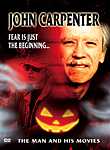
There was a period, roughly during the ‘80s, when John Carpenter was my favorite film director. No one else was consistently turning out such well-made pulp movies: Assault on Precinct 13, Halloween, The Fog (which I like a lot better than most people, despite its problems), Escape From New York and The Thing, all released in one extraordinary six-year stretch. My love of his work probably peaked with the arrival of 1986’s Big Trouble in Little China, one of comparatively few Carpenter pictures I saw in a theater. (I avoided seeing The Thing for years, by the way, because I’ve never been a fan of gory movies. Now I love it, however.) For some reason, few people seemed to like it as much as I did, and it didn’t do much at the box office. Decades later, it seems amazingly ahead of its time in melding Hong Kong style action with Hollywood production values. Since then, admittedly, he has seemingly run out of steam. Prince of Darkness (1987) and They Live (1988) are good films, especially the latter, but not near what I’d consider his peak work. Moreover, he then took a long vacation before returning with the forgettable (and, unsurprisingly, forgotten) Chevy Chase vehicle Memoirs of an Invisible Man. Which, by the way, was adapted from what is actually a pretty good novel. Next was a TV movie anthology, Body Bags, before he came roaring back with what I personally consider perhaps his best movie, 1995’s In the Mouth of Madness. Any hopes I had that this augured career resurgence for him died, however, when the same year saw the release of what I then considered Carpenter’s only outright awful film, an epically pointless remake of Village of the Damned. Since then it’s pretty much been a spiral. It took (again, in my opinion) nine years for Carpenter to return to, or even surpass, the heights of Big Trouble in Little China. Now nine years have passed since In the Mouth of Madness, and there’s no sign that another highlight is due anytime soon. In fact, I see little evidence that Carpenter has even been developing another project since the highly disappointing 2001 release Ghosts of Mars*. [*One sign of that Carpenter’s lately been out of juice is that the majority of his recent films—four of the last five—have been remakes of previous films. Village of the Damned is a remake, obviously, but worse than that, Escape from L.A. and Ghosts of Mars were basically retreads of two of his own pictures, ones made years and years earlier.] Still, hope springs eternal, and just as In the Mouth of Madness came out of nowhere, Carpenter may still have an ace or two up his sleeve. John Carpenter is an hour long documentary, presumably, from the accent of the narrator, done for British television. It’s now available on DVD from the fine folks at Image. (Just to be anal, the disc’s complete title seems to be John Carpenter: Fear is Just the Beginning…the Man and his Movies.) It’s a really well made piece and a more than decent introduction to Carpenter and his films. There is one major flaw, but we’ll get to that later. Given the short length, the feature hits the ground running. Biographical information on its subject is quickly provided. Carpenter’s dad was a musician and college music teacher, which explains Carpenter’s having successfully scored nearly all his films himself. While a kid, the family moved to from Carthage, New York to Bowling Green, Kentucky. According to Carpenter, the change of atmosphere was traumatizing, and he described the area as being part of the Bible Belt, and "Jim Crow" country. Nevertheless, the family remained there. One imagines that this situation was partly responsible for theme of isolation that runs through many of his pictures. In the crudest terms, the rebellion of professional bad-ass Snake Plissken against the rather broadly cliché religious fanatics of Escape of L.A. was probably a fantasy reaction to these memories. Carpenter’s origin as genre filmmaker is quite nearly archetypical. As a young kid, Carpenter became fascinated with film, especially Westerns and sci-fi / horror movies. In the documentary, for instance, he tells of his profound reactions to seeing the Jack Arnold movie It Came From Outer Space. He was, like his contemporary Stephen King, a fan of the infamous EC horror comics. (Famous Monsters of Filmland filled in this spot for kids born after the ‘50s.) Then, like so many other aspiring film buffs, the young Carpenter was given a home movie camera. Years passed. Although a member of a fairly successful (in local term) rock band, Carpenter elected to attend the storied SCU film school in the late ‘60s. This was, needless to say, during the very peak of the anti-war radicalism, and it seems probable that these affected his politics, which are left-wing and anti-authoritarian to the point of anarchism. (Anyone who believes I base my reaction to a film solely on its political content will have a hard time getting around my love of Carpenter’s stuff, as his movies tend to wear his beliefs on their sleeves.) Soon we start getting into the movies themselves. One of the documentary’s great strengths is that it does in fact examine his pictures in as much detail as is possible given their obvious time constraints. Well, actually, that’s not true. In fact, only his films up to Starman (with a couple of the blah ones, like Christine, skipped over) are really covered in any depth. If the program has a problem, it’s that it only seems like the first half of a longer work. Rather than delving into annoyingly abstract theorizing about Carpenter’s films, the program wisely offers straightforward analysis of his early works and what influenced them. Howard Hawks, of course, is prominently mentioned in this regard. While I missed the lack of coverage of Carpenter’s later movies, I have to admit, his golden age* (save the complete lack of any mention of Big Trouble in Little China) was during the period the show covers. [*In fact, apparently in an effort to shoehorn in some stuff on his later films, we at one point mysteriously abandon the chronological examination of his work and suddenly jump forward to spend some time looking at two of his typically weak later films, Vampires and Escape From L.A. Frankly, were they committed to this idea, In the Mouth of Madness would have been a much more appropriate object of inquiry. It’s not only Carpenter’s last important film (so far, one hopes), but one of the few great horror pictures of the ‘90s.] Perhaps the most impressive aspect of the documentary is the wide range of interview subjects they gathered. Some of them seem chosen more for name recognition than their importance in Carpenter’s work (Alice Cooper, Peter Fonda), but aside from the sadly deceased Donald Pleasance, the major players are here: Debra Hill, Jamie Lee Curtis, Kurt Russell, Nick Castle, Adrienne Barbeau (aka, at one point, Mrs. John Carpenter) and other members of Carpenter’s stock company. I obviously would have liked had the program also examined his later films, at least if it was willing to be properly critical, but even so, it’s pretty neat. Those looking for a more in-depth examination of Carpenter’s films, meanwhile, are advised to hunt down the second (updated) edition of the book Order in the Universe by Robert Cumbow. Other such tomes include John Carpenter: The Prince of Darkness, by Gilles Boulenger, John Carpenter by Michelle Le Blanc, and The Films of John Carpenter by John Kenneth Muir. However, the best thing to go is to buy or rent Carpenter’s films on DVD. Few directors have been better served by DVD than he, for Carpenter has always preferred to work in widescreen, and to utilize the entire frame as he does so. Therefore pan and scan or ‘standard’ or ‘full frame’ versions of his films butcher them mercilessly. As well, because of his large hardcore fan base, many of his films are available in packed special editions. Most especially, his shared audio commentary track with Kurt Russell for The Thing remains the best commentary I’ve ever heard. Ken’s Rating: 7 out of 10.
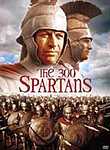
300 Spartans (1962)
In the fifth century B.C., King Xerxes, ruler of the mighty Persian empire, sought to avenge his father’s earlier defeat by the Greeks at the battle of Marathon. Having raised a gigantic army and navy, he intended to sweep through Greece, which was at the time a loose confederation of city-states. The most militaristic of these was Sparta. Those Greeks that advocated a united front against the Persian foe looked to them for leadership, and ceded them leadership of their combined army and naval forces. Time had to be bought, however, so that both the Greek land and naval forces could be built up. King Leonidas of Sparta led an army to the narrow pass of Thermopylae, where a small number of Greeks might hope to stymie the progress of the massively larger Persian army. Led by a small contingent of Spartans, a Greek force of roughly 10,000 held off a force numbering in the hundreds of thousands. By the time Xerxes landed his forces, the force at Thermopylae was in place. The Persian ruler squandered four valuable days attempting waiting for the Greeks to surrender. He wasn’t able to believe that their vastly outmatched numbers would actually dare to fight against him. Finally, though, his patience wore out and the Persians attacked. The Greeks immediately retreated before their onslaught. However, once they had led some of their opponents into the tight pass, where the main body of their superior numbers could not be brought to bear, the Greeks turned and slaughtered those foes who had filtered in after them. Xerxes sent in wave after wave of soldiers, including his elite troops, the Immortals, but the Greek army could not be dislodged. His loses were increasingly heavy. In the end, the Greeks were undone by treachery. A goat farmer named Ephialtes led a Persians force through a secret mountain pass, one that would put them to the rear of the Greek warriors. (No jokes, please.) Alerted, the majority of the Greek army retreated, while Leonides’ 300 Spartans, along with a slightly larger number of Thespians, remained behind to block the Persian advance for as long as they could. Eventually, weary of losing so many of men in direct combat, Xerxes used his archers and spearmen to massacre the Spartans. The Persians sacked much of Greece, and razed the city of Athens. However, the powerful Athenian navy had moved to safety, and engaged the still larger Persian navy at Salamis. As in Thermopylae, the wily Greeks used a narrow water pass to outset the Persian’s numerical superiority. The Persian ships were routed, and Xerxes returned to Persia in defeat. He left a large army occupying central Greece, but eventually they were decimated in the battle of Plataea. Persia never again attempted to invade Greece. 300 Spartans is a middling sort of film. It has its moments and is never boring, but on the whole it’s pretty cartoonish. Deep characterization isn’t the picture’s hallmark, and cliché dialog ("Our arrows will blot out the sun," "They fight like machines," etc.) does occasionally inspire a chuckle or two. Xerxes probably comes off the worst, as he definitely suffers from a case of Evil Tyrant-itous. He’s overwrought enough, both as scripted and as acted, to be of danger of seeming a comic figure at times. I also thought the musical score was given to working too hard, albeit in a generic sort of way. Nor was strict historical accuracy apparently the film’s primary goal. Leonidas is indeed our main character, and Sir Ralph Richardson (brought in to class up the joint a bit) pops up now and then as the Athenian Themistocles, who actually led the Greek naval actions. Other details are correctly portrayed as well. Xerxes does dither—although I don’t think the film has him doing so for four or five days, as he did in real life—and a traitor named Ephialtes does show the Persian the path that dooms the Spartans. Perhaps the biggest historical liberty is that they make it look, either for financial or dramatic reasons, as if the Spartans had even less support at Thermopylae than they did in real life. Here the Greek forces seem to number maybe a thousand men altogether. Meanwhile, there’s a preemptive raid on Xerxes’ camp by Leonidas and a small squad that I think was created out of whole cloth. And, since this is a historical picture, Xerxes is naturally seen watching the obligatory dancing girls. Can’t make a historical epic without your dancing girls. The film husbands its budget well, by which I mean that the battle scenes are large scaled enough not to appear threadbare. Obviously we don’t see tens or hundreds of thousands of troops, but there are an awful lot of extras in these scenes, perhaps enough to justify the old ‘cast of thousands’ tag. Of course, it helps that these actions basically take place out in a field. That doesn’t cost much. Xerxes’ surroundings are lush, but small scaled, while the Greek senate meeting boasts maybe a dozen characters entire. Most amusingly, the naval actions are alluded to, but never portrayed, as if one were watching a stage production. Another money saver was to avoid casting major stars in the films. Most of the actors had been around, but aside from Richardson, none were in any sense really well known. Richard Egan is properly stalwart (although not much more than that) as Leonidas. Barry Coe and Diane Baker are a bit too callow as young lovers Phylon and Ellas. And, as noted above, David Farrar is encouraged to play Xerxes a little too broadly. Other than that, most of the actors are good enough to not really draw your attention one way or the other. The cast and crew includes some interesting names. Diane Baker, the female lead of Krakatoa, East of Java, makes her return to Netflix Month. Ms. Baker started her career well with an interesting mix of films, all released in 1959. On the high side, she played Anne’s older sister in The Diary of Anne Frank. She also assayed the female ingénue role in the James Mason / Pat Boone flick Journey to the Center of the Earth. Finally, she had a major role in the hilariously awful sudster The Best of Everything, starring Joan Crawford. 1964 was another hallmark year, as Ms. Baker appeared in four films, including major roles for both William Castle (Straight-Jacket, another Joan Crawford picture) and Alfred Hitchcock (Marnie). She had remained a busy actor in all the years since, on both the silver screen and on television, including an appearance as Matthew Broderick’s mother in The Cable Guy. More prominently, she was the senator who had Hannibal Lector transferred in The Silence of the Lambs. The traitor Ephialtes was played by Keiron Moore. Mr. Moore also appeared in dozens of films, including Darby O’Gill and the Little People. (Meaning that, like Diane Baker in Marnie, he supported the young Sean Connery.) Fans of this site, meanwhile, are more likely to know him for his starring roles in such cheesy genre films as Dr. Blood’s Coffin, Crack in the World and Day of the Triffids. In the latter, he was the guy in the lighthouse who discovers the murderous plants’ fatal vulnerability. Director Rudolph Matè helmed numerous movies, including When World Collides (1951) and the 1950 noir classic D.O.A. However, Mr. Mate remains better known as the cinematographer of such classics as director Carl Theodore Dreyer’s Passion of Joan of Arc (1929) and Vampyr (1932). Moving to the States, he worked in that capacity in films ranging from Charlie Chan’s Secret (1936) to Pride of the Yankees (1942) to Gilda (1946) to The Lady From Shanghai (1947). However, once he became a director, he left cinematography behind. If 300 Spartans doesn’t always put history first, it remains true that seeing the battle take place provides a better logistical sense of what happened then from having merely reading about it. (I’m assuming the film was shot on the actual locales, although I don’t really know that.) However, a helicopter shot or two, laying out the overall geography of the area, would have really helped things. It should be noted that many people seem to hold the film in high regard. From their comments as found on the Web, a lot of them seem to have first seen the movie while a kid, and imprinted on it. I can see that, but this certainly isn’t Zulu or anything. 300 Spartans is decent enough. However, its good to know that they could take another shot at this and have a decent good chance at doing it better. And while Troy didn’t do so well here, it made a lot of money overseas, so maybe someone will take a crack at it. I’d suggest using Steven Pressfield’s superlative historical novel Gates of Fire as a starting point for this. Ken’s Rating: 6 out of 10.
-Review by Ken Begg |
|||||||||
|
|