Another feature of... |
|
Another feature of... |
|
|
for
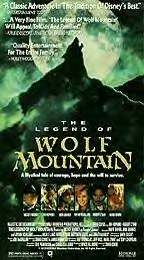
The Legend of Wolf Mountain Plot: Escaped cons chase kids around a mountain wilderness. Let me stipulate that Legend of Wolf Mountain isn’t an entirely awful film. (Although it doesn’t bear up to repeated viewing or microscopic scrutiny, either.) Even so, there are enough amusing elements to keep the bad movie buff marginally entertained. Certainly the video box quote comparing the film to "the best of Disney!" proves a tad suspect. And that’s true even if they mean Roy Disney. Junior high school students congregate for an assembly. Giving a lecture is local forest ranger Steve Haynes (Bo Hopkins!). This is a pretty realistic scene, in that Hayne’s speech is earnest and dull and the students look extremely bored. At least those in the background do. The ones in the foreground have been instructed to look extremely interested whenever the camera’s on them. Their applause at the end of the program is also a bit too enthusiastic. Haynes relates a story involving a local Indian myth about a "wolf that becomes a warrior to protect the mountain." I have it admit, the story made me think. Well, it made me think about hunting down a copy of Forest Warrior, in which Chuck Norris is a mythical Indian warrior who can change into a wolf to protect Nature and stuff. Steve stops to talk with his daughter Kerry. Being your average young teen, she’s embarrassed to be seen in public with her dad. In the school lobby, Kerry ends up tussling with Casey, a spitball-shooting jerk. Wandering into the middle of this is John, a skinny geek of a kid – think a thinner Harry Potter, minus the accent – who has a cast on his arm. The school principal sees part of this and hauls them to her office for a dressing down. (Boston Public this ain’t.) As a result, the kids miss the bus home. The principal has student aide Maggie, who just happens to be Kerry’s older sister, drive them home in the "school car." I never heard of such a thing, but maybe it happens regularly outside the Chicagoland area. Here we get our first taste of the film’s most confounding element. John calls Casey, the jerky kid, "blimp boy." Here’s the thing: Casey is constantly referred to as being fat, despite the fact that the kid playing him isn’t even remotely overweight. I mean, seriously, he has a completely average frame. Even so, the references to his purported obesity are nearly omnipresent. Perhaps you think I’m exaggerating for comedic effect? Here’s a sample of dialog from throughout the movie, issued by a wide array of characters: "…the chubby kid…" / "Fat kid’s getting sick!" / "Next time, fatso…" / "chubs…lump of lard…" / "I wonder if they make coffins in your size." / "When we get back, you’re going on a diet!" / "Give me that knapsack, dough boy!" / "Fat boy’s going over the edge…" / "…fasto…" / "Is tubby slowing you down?" / "Look, porky…" / "He’s just a little fat kid." There are two bewildering facets to this. First, is it that hard to find a chubby young actor? It’s not like the one they ended up with is Laurence Olivier or anything. And I’m pretty sure I’ve seen genuinely obese kids in other movies. But OK, let’s say that they couldn’t find a fat actor to play the fat character. Wouldn’t you change the script?! There’s no real plot utility to having Casey be overweight. There isn’t a point where he can’t climb in or out of something because he’s too big or anything. So once you’ve cast a non-husky actor in the role, wouldn’t you just remove these lines? And didn’t the actors say anything? I’d feel like a jackass constantly referring to a regular-looking kid as if he was some tremendous lard-ass. In any case, this is certainly a rare example of obesity being an Informed Attribute™. As Maggie drives them home, we learn that John’s dad is the town sheriff. (Gee, will this prove a plot point of some sort?) Then Maggie stops at the cleaners, because, and I quote, "I have to pick up my dress for the movie tonight." Ah, those sixteen year-old girls and their dry cleaned going-out-to-the-movie dresses, eh? To be young again! Maggie also says something mean to Kerry. I’m assuming this is to set up a ‘big’ scene later, revolving around her regret about this after Kerry goes missing. I’d be more copasetic about this prospect if the girl playing Maggie weren’t already proving a less than able thespian. [Future Ken: In case you’re wondering, my trepidations did not prove to be without basis.] Suddenly two escaped criminals drive up in a car with a flat tire. The cops are seeking them following a shooting during an armed robbery. Bixby is the somewhat dim but comparatively non-threatening one. The other is Painter, the film’s Obligatory Scary Psycho Dude. (Robert Z’Dar!!) This is before Z’Dar had his plastic surgery, back when he looked like Jay Leno after he’d been stung by a swarm of bees. Since Maggie left the car running, the fugitives hijack it and take off. In a less than convincing bit, they somehow don’t notice the kids lurking in the backseat until after they drive off. Which is quite simply ridiculous. Nor do they pull over for the two seconds required to toss them out of the car. Instead, Painter threatens them with his gun, so that we get he’s the film’s Obligatory Scary Psycho Dude. Well, duh. He’s played by Robert Z’Dar! Meanwhile, back at the cleaners, Maggie is supposedly just now noticing the cop cars congregated right outside the bay window she’s been standing right in front of all this time. Between this and the unseen kids in the backseat, I wondered if the film was set in an alternate universe in which humans never developed peripheral vision. Painter and Bixby drive into the mountains surrounding the town. Painter continues to be a surprisingly scary character for what I assume is meant to be a kid’s film. For instance, he sticks his gun right into Kerry’s face and yells that he’ll "splatter your brains!" Yep, nothing spells Entertainment for the Entire Family like a giant Rondo Hatton look-alike threatening to blow off the head of an eleven year-old girl. The kids have a barely whispered conference in the back seat, which someone Painter and Bixby don’t hear. I guess people in this universe don’t have peripheral hearing, either. After Casey gets sick, the hoods stop and kick the kids out of the car. For our general amusement, Painter looks like he’s going to murder them. Bixby, however, talks him out of it. After they drive off, Kerry begins musing. The road they’re on, she knows, goes into the Wolf Mountain National Forest but doesn’t lead out of it. Which means that eventually they’ll have to turn around and come back through. Kerry and John decide to build a booby trap to disable the car. I think this is meant to make them look spunky, especially Kerry. Instead, they come off like idiots showing off their respective death wishes. Painter is a complete psycho who very nearly murdered them just for kicks. Now they propose to do something designed to really piss him off and make the whole situation personal. Let’s hope real pre-teens would be smart enough to just get out of sight and hide until the car came back and was gone. Besides, disabling the car at this juncture would be somewhat pointless. By now – were this happening in the real world, anyway – every cop in the state would be mobilized. Especially with three kids, including a local sheriff’s son, having been taken hostage. If the fugitives had to turn around and head back the way they came, even a fairly short distance, they’d certainly be caught before they could escape. To my embarrassment, it was only around here that I realized the movie was more or less going to be a knock-off of Home Alone. Except that Z’Dar is a more authentically threatening figure than Daniel Stern or Joe Pesci, which gives the film a very weird vibe. Watching a character identified as a cold-blooded murderer running around some woods trying to kill young children is more disconcerting than was presumably intended. We cut to Haynes and Sheriff Page, John’s father. They’re sitting around the police station and gnawing on the scenery while somber music plays. Then avuncular local rancher Pat (Mickey Rooney!!!) makes his entrance. With Hopkins, Z’Dar and Rooney on hand, we now officially have what a B-movie aficionado would call a Name Cast. Next, to relieve the *cough, cough* tension, Casey’s mom comes in. She’s apparently the Town Crank, which would explain why her kid is always spit-balling his peers and engaging in other such mischief. Lest we fail to understand that her character is meant to be humorous, comedy music plays as she enters and rags out the Sheriff. Anyway, the kids spike the car’s tires. Since the script needs them to be in constant danger – ha, ha, ha – they prove stupid enough to hang around to watch what happens. Which means that Painter is on their heels from the start. In fact, he nearly manages to shoot them right off. You might think that with thousands of acres of forest to hide in, and with Kerry presumably knowing some woodcraft from her father, it would be fairly easy for the kids to hide until the police and various volunteers swarmed the area. Again, though, that would mean there’s no movie. So Bixby is nervous and scared while Painter incessantly states his intention to deal the children a horrible death. Meanwhile, Casey catches some splinters in his supposedly fat ass. Har har. This leads to a really, really bad ‘comic’ scene when they’re removed. As usual, we’re getting kind of bogged down here. Anyway, here are a couple of the larger issues I had with the film. First, it turns out that the wolf/mystical Indian warrior dude is real. He appears to Kerry, informing her that she’s been appointed by some Higher Power as the protector of the mountain and Nature and stuff. (That’s right, the film is stealing plot devices from On Deadly Ground.) Anyway, this spirit isn’t supposed to intercede much. At least until the end of the movie. Then he magically appears and dukes it out with Painter. Uh, whatever. Mystical Indian Warrior will later climb through the window of Kerry’s older sister Kathy, who’s found sleeping in her dorm room at college. (I don’t care if you’re a sacred spirit or not, that’s kind of creepy.) He gives her psychic information about her sister’s plight – which means that their father hasn’t bothered to call her?! Kathy immediately heads home, apparently because the roughly dozen characters we have already weren’t enough. I mean, couldn’t they have consolidated the two sisters into one person and avoided further cluttering things up? On the other hand, the role does afford the film more *ahem* star power in the person of Vivian Schilling. Misties will remember Ms. Schilling as the frizzy-haired protagonist -- not to mention co-writer -- of Soultaker, opposite Joe Estevez. That film also co-starred David ‘Shark’ Fralick, who plays Bixby here. In all, Schillling and Fralick appeared in four movies together. It’s easy, and not utterly unfair, to have sport with Ms. Schilling’s oevre as a thespian and sometime screenwriting and producer. Even so, look at the list of people she worked with in a career spanning just over a dozen movies: Fred Olen Ray. Ross Hagen. Aldo Ray. Dawn Wildsmith. Bobbie Bresee. David Carradine. Joe Estevez (twice). Robert Z’Dar (twice). Bo Hopkins. Mickey Rooney. Joanna Pacula. Charles Napier (twice). George Lazenby. Martin Kove. Brion James (twice). Corbin Bernsen. Bo Svenson. Dan Haggerty. Judge Reinhold…and more. Admittedly, she played small roles in some of her movies -- although not as many as you may suspect -- and so she might not have worked directly with some of the above. Still, it’s an impressive roster. OK, back to problems with this film. At one point the kids manage to get at Painter’s Colt .45 semi-automatic away while the cons are away from camp. (Yeah, and he’s just going to leave his gun sitting there.) In a classic IITS moment, they don’t even take the gun with them. Instead, they remove the magazine and abscond with it. Since John’s father is a cop, he explains, he knows that the removed magazine means the gun is now sans ammo. Except that it’s not. Since the gun has already been fired, there would be a bullet already ‘in the pipe.’ That’s the way a semi-automatic works. When a bullet is fired, the recoil ejects the spent cartridge casing and brings the next shell up into the chamber. In other words, the screenwriters have built a fair amount of the script around a mechanical fallacy, and a pretty obvious one, to boot. I’m no gun expert, and that’s the point. This is not complicated stuff. In any case, Painter will eventually get the clip back. Yet in the climax of the film, they haul this hunk of misinformation out again. And again, would you sneak into camp, risking a horrible death at any second, and pause to remove the magazine from the pistol rather than just grabbing it and running? Let’s say none of the kids are comfortable with using the gun to protect themselves. (Although, at eleven, I’d think it likely at least one of them would be.) Even so, how about just grabbing the gun and tossing it way back in a cave somewhere? Or in a stream? Something.
Summary: Not completely horrible, but it’s got its moments. ______________
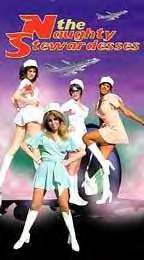
Plot: The adventures of some, well, naughty stewardesses. Ah, the miracle of DVD. Seduction Cinema, a company specializing in sexploitation fare of the ‘60s and ‘70s, brings us another example of the oevre of Al "Dracula vs. Frankenstein" Adamson. Here Adamson turns from his more typical biker and horror films. The idea being, presumably, to horn in on the success of such Roger Corman produced sexploitationers as Candy Stripe Nurses. Stewardesses were then (even more than now) numbered among those inherently sexy women’s occupations, along with maids, nurses, cheerleaders, etc. The early ‘70s was, more or less, when the whole Playboy ethos, including its well-circulated bawdy joke page, would have been at its peak. Then throw in the women’s liberation movement. At this point it was still a fresh phenomenon, and associated more broadly – no pun intended -- with sexual freedom. Finally, the airlines were famously known to only hire as stewardesses women who were young, unmarried, and trim. In other words, hot – and theoretically available -- chicks only. (Of course, non-discrimination lawsuits eventually rained ruin and desolation upon this Eden-like paradi…er, brought an end to this sort of horrifying objectification and gender-based injustice.) Finally, there was the nature of the job itself. Stewardesses kept odd hours and flew hither and yon, literally all over the world, without being chaperoned. Given the time period, this fostered an image of almost brazen independence from repressive cultural mores. Add up these factors, and you produced the cherished belief -- cherished by male would-be swingers, anyway -- that any young woman adventurous enough to seek such employment would probably be a bit ‘wild.’ Hence such films as The Stewardesses, which was shot in 3-D (!!). However, the whole sex-crazed stewardesses image was really cemented by the M*A*S*H-esque novel Coffee, Tea or Me? This tome sold millions of copies in cheap paperback editions. Now, grab on to your seats, because I don’t want anyone falling to the floor in astonishment and hurting themselves. Still, despite purportedly being authored by two actual stewardesses [albeit nonexistent ones], the book was actually written by a man. Go figure. Naughty Stewardesses opens startlingly like, well, a film. Certainly not what I was expecting from an Al Adamson picture, I must admit. A nifty ‘50s Girls Band-type song plays over the credits, which are illustrated with stills of the cast. Then we cut to a stock footage airliner in flight. Inside, we see various folks in a truly eye-scarring array of 70’s fashions and hairstyles. Left this fail to tip us off that Our Feature Presentation takes place in the past, we also see that one passenger is holding her dog on her lap. Moreover, that some others are *gasp* smoking. Nor is this the most scenic bunch you’ve ever seen in a movie. Indeed, they look like normal, randomly unattractive people wearing really ugly clothes and having made really bad choices in hairstyles. Near the front of the plane we see some stewardesses. They are wearing white caps, pink mini-uniforms and shiny white go-go boots. There’s Barbara, the Black One; Margie, the Slutty One -- well, OK, sluttier one -- and Jane, the Smart One. (At least I’m assuming Jane’s the Smart One, as she’s wearing glasses.) The stews stand around yakking loudly about their sex lives. This had me pondering what the passengers sitting four feet away from them are thinking. Probably "Where are my damn cocktail peanuts, already?" By the way, I was right about Jane. When Barbara reveals that she had sex standing up the prior night, Jane considers this. "I don’t understand how you can do that, Barbara," she opines, leading us to wonder if she’s a prude. After all, she does wear glasses. Fear not, though! "Especially with your height," she continues. "The angles are all wrong." Ho ho! What a naughty bunch of stewardesses they are! The pilot, or co-pilot, or whatever, comes out to request some coffee be brought to the cockpit. This leads to – are you sitting down? -- a series of double entendres. First he requests that the coffee be hot this time. "You know we’re good at making it hot," Debbie purrs suggestively. Annoyed, he asks which one of them is going to "do it," i.e., bring up the coffee. "Depends on what you want done," Jane lasciviously replies. The pilot reacts to all this banter with a pained expression. Perhaps he’s meant to be seen as a ‘square.’ I, however, had a more charitable interpretation. To me he bears the look of a guy who’s died and finds himself trapped for all eternity inside an especially weak Benny Hill routine. Jane leads him to the rear of the passenger compartment and gives him his coffee. As he sips (I’m assuming the cup is actually empty; if so the actor does an especially good impression of someone holding a full cup – really, I mean it), she removes her glasses and cap and we see that *gasp* she’s really hot. This leads to further badinage, although I appreciated that the pilot actually acts like a somewhat chagrined adult instead of your typical sexploitation horn dog. Even so, being the sort of picture this is, the pair quickly end up in a passionate clinch. Since Jane is played by Regina Carol, i.e., Mrs. Al Adamson, I was trying to imagine her husband directing the scene. "OK, guy, when you two start making out and you reach down to fondle my wife’s ass, make sure to grope her in such a way that her skirt rides up, so that the audience gets a good look at her bum, especially after she removes her panties." This is all taking place, by the way, in a semi-open compartment. Hence their antics are seen by a *ho, ho!* ten year-old kid. He, in turn, ‘comically’ tries to alert his father to the situation, only to be continuously waved off in irritation. Anyway, the amatory antics continue for a while, accompanied by regular intercutting to the passengers. I think we’re meant to have sport with their ignorance of the ‘hot action’ occurring under their noses. This is all accompanied by the sort of Wurlitzer music made popular in Euro sex films of the period. Here, however, they apparently couldn’t afford the traditional singers to go, "LA LA LA LA LA." Eventually we cut down to a highway. We see a Hot Sensuous Blond speeding along in a sporty car. This footage is accompanied by a rock song meant to suggest "Born to be Wild," albeit at a fraction of the licensing fee. (I’m being a bit snotty, actually, since both of the songs we’ve heard so far have been pretty good.) At a gas station, a hunky swingin’ dude – we can tell from the monstrous sideburns that march across his face like Sherman through Atlanta – asks a fat dude if he knows where one can obtain a ride to LA. "Hang around," the fellow advises. "Maybe you’ll find one." Sure enough, Hot Sensuous Blond immediately drives into the lot for a, uh, fill-up. Boy, when you review this sort of picture everything start sounding smutty. Unsurprisingly, HSB ends up giving the guy a lift. The two engage in ribald, swingin’ banter as they proceed down the road. Then they exchange their names, Debbie and Scott. Ah, the ‘70s. Looking for a ‘Thing’ -- as in, you know, "What’s your Thing?" -- Debbie reveals that she’s shortly to begin a new job as, big shock, a stewardess. Next scene. Debbie arrives at the house she’ll be sharing with the gals we met earlier. "It isn’t much," Jane announces as the camera pans across the palatial spread’s fireplace. Barbara knocks on the bathroom door to announce Debbie’s arrival. Inside, Margie is taking a shower. Viewers not conversant with this era’s films might be cursing the shower stall’s pebbled glass. However, those more familiar with the breed will rest secure in the knowledge that she’ll inevitably stick her head, and, uh, other parts, out soon. When she does, she expresses displeasure upon learning that their visitor is female. Sadly for us, I guess – and by ‘us’ I mean guys, because who else would be watching this? -- Margie apparently won’t be participating in any girl-on-girl make-out sessions. This is followed by some actual conversation amongst the four ladies, allowing us to get to know our characters. Modern B-Movie fans, unfamiliar with this sort of thing, will no doubt react with impatience, as when watching an old ‘horror’ movie where sometimes tens of minutes go by in between people getting killed. Then -- and boy, were the ‘70s another era -- Margie jumps up onto a stool so that Barbara can shave her, uh, bikini area, in preparation for a "hot date" that night. (Talk about that whole ‘friend in need’ thing!) "I’ve, uh, never seen that done before," Debbie admits. "It does look clean." That night the girls hold a swingin’ soiree, the occasion being Jane’s birthday. This bash seems the result of buying an economy "Party at the Playboy Mansion" kit. (The deluxe kit came with James Caan, who once out of the box immediately gets drunk and beats the hell out of somebody.) Margie appears with a deli tray, leading to a ‘funny’ scene where the guests swarm around it like piranha. Actually, knowing Adamson, this is probably because the actors had been promised cold cuts in lieu of pay. That and real booze, since these folks look a little too convincingly drunk. Margie, meanwhile, with her medium-length brunette hair all curled, her heavy makeup and low-cut neckline, here looks exactly like what Mrs. Roper from Three’s Company must have when she was in her mid-thirties. Then the ‘cake’ comes out. It’s a naked man lying across a table, strategically covered with whipped cream. Jane, to the inebriated cheers of the crowding onlookers, proceeds to lick the cream off. In case this sounds even vaguely ‘erotic,’ it isn’t. Damn ‘70s. And, again, I had to wonder what Adamson was thinking as he filmed his wife doing all this. From the look of distaste on Debbie’s face, it seems she shares my opinions on all this. Let’s see: Jane’s the Smart One, Margie’s the Dumb One, Barbara’s the Black One, and Debbie’s the one who Wants True Love. Or at least a Reasonable Facsimile Thereof. (At this point I foresee hitchhiker Scott making a reappearance.) Margie notices her standoffishness and asks about it. "This just isn’t my scene," Debbie admits. Then she breaks out crying and runs out of the house. Inside, a pie fight starts up. A pizza pie fight. Don’t ask. Cut to the ladies working another flight. More characterization, etc. Meanwhile, I was wondering why they needed four stewardesses for about half a dozen passengers. Especially if three of them are just going to hang around the kitchen gabbing. Also, why is the hatchway window dark when the stock footage shot of the airplane that introduced the scene was in daylight? Next we see Margie and Debbie walking through a parking lot. They get into a car and drive off, the copious billboards informing us that we’re in Las Vegas. For those interested, Danny Thomas is at the Sands and Alan King and Ella Fitzgerald – cool – are at Caesar’s. This leads to a rockin’ Las Vegas montage sequence, the first one in about a hundred years that, thankfully, wasn’t accompanied by some version of "Viva Las Vegas." More stuff. I guess they had some running time to burn here. We watch the two boating around for a while. Then it’s back to the city, only now at its full, neon-lit nighttime glory. [Engelbert Humperdinck at the Riveria! Bobby Sherman at the Silver Slipper! Burger or Dog and Beverage 25¢ at the Slots a Fun!] Meanwhile, I was wondering if Regina Carol was doing her real life Las Vegas stage act -- memorably captured in Dracula vs. Frankenstein – as Al filmed the other two actresses for this sequence. Either that or he was getting kickbacks for putting all these casinos in his film. Or both. Eventually, though, all good montages must come to an end. We see the girls welcoming passengers onto their next flight. Again, the clothes and hairstyles on display here are mind-numbingly atrocious. Truly, it’s a sartorial parade of horrors. At least until one older gentleman, Mr. Brewster, shows up. Thankfully, he’s wearing a smart blue blazer and, forgoing the yard-wide polyester ties all the other men are wearing, a white turtleneck sweater. If I can just keep looking in his direction, I may escape this scene with my retinas relatively undamaged. (Margie also keeps on eye on him, as she’s hunting for a rich husband.) One passenger has been liberally caked with pancake makeup and spritzed with water to simulate a heavy sweat. Either he’ll be a nervous hijacker or a really sick guy. Yep, he’s fainting, so he’s sick. (If I were wearing his shirt and tie I’d feel the same way.) Brewster takes command, loosening the man’s neckware and sending Debbie off to get the plane’s portable oxygen tank. Unfortunately, we then cut to close-up reaction shots of many of the other passengers. These allow us a good, long look at their own horrifying attire. Hey, pass that oxygen here when you’re done! After repeatedly smacking Sick Guy’s chest with the flat palm of his hand (??), Brewster starts feeding him the oxygen. This proves enough to revive the fellow. Impressed with his calm demeanor in crisis, Debbie walks off the plane with the Good Samaritan. Brewster asks her out for a drink, and she – yuck! – agrees to have a cocktail with the creepy old mummy. Admittedly, he’s comparatively suave and handsome for an older man. But c’mon, he must be around forty years older than she is. Yet again, he’s the only guy around who isn’t dressed like a complete idiot. Worse yet, we see, the drink is at Brewster’s home. This is clearly, like the girls’ place, a real house. (Thus low-budgeted movies in the ‘70s, forced to shoot in real locations, often achieved more verisimilitude than better-funded productions that could afford to build sets.) Brewster steps into his room to change – evoking fears on my part of a closet full of polyester horrors – whereupon his finds Dianne, a hot naked blond, lounging in his bed. Cue the Funky Wurlitzer. They engage in, that’s right, Swingin’ Banter, while we strain to keep from picturing this moldering specimen ‘doing it’ with this young chick. It’s like watching an HBO presentation of The Anna Nicole Smith Story. Brewster goes back to the bar. Watch for the unnatural pause between Debbie noting that his house is beautiful and Brewster’s reply. If I’m not mistaken, the actress playing Debbie forgot one of her lines and it took the guy playing Brewster a few seconds to realize that he should move on. Even so, I’m fairly impressed with Adamson’s direction here. I’ve mostly seen his horror stuff, which is generally of an extremely poor quality. (Reasons why can be found in my review of Dracula vs. Frankenstein, and my article on producer Sam Sherman’s commentary track for that film.) This picture, in contrast, is actually somewhat coherent. About the only real sign of its shoestring origins is that about every ten minutes a blown line will appear without having been reshot. Anyway, this heads into Three’s Company territory, with Brewster trying to juggle the two chicks without either becoming wise to the other. Finally Diane, getting impatient, starts smacking the wall behind her. This has the same effect as Fonzie bopping a jukebox machine, and the Funky Wurlitzer kicks back on. Meanwhile, Brewster and Debbie hear the slapping noise and Brewster hurriedly runs off to placate Diane before Debbie figures out there’s another woman in the house. "We both know what we have going for us," Diane tells him. "Raw sex. Now take your shirt off and get over here." We see just enough of what follows to make me reconsider my opinion on this being one of Adamson’s horror pictures. Getting bored -- well, so is Diane, but I don’t want to think about that -- Debbie continues sitting at the bar. Eventually Brewster reappears, clad in blue Sans-a-belt pants and a matching golf shirt. The slacks, by the way, are tight enough that you can practically identify the brand of the pack of cigs he has in his pocket. This is pretty hideous, fashion-wise, but still head and shoulders over much of the clothing we’ve seen. "I’ve been admiring your house," she says, although she hasn’t left the room. "It’s very interesting, but also very revealing." I didn’t know those two qualities were mutually exclusive. She mentions a rack of high-grade sporting rifles on the wall. As I note below, the Weatherby company is given a "firearms by" credit in the beginning of the film. This leads me to wonder if either Adamson or Sherman was a gun enthusiast, and got themselves some free guns out of this. Brewster notes the guns are partly for home defense. Yeah, you never know when a berserk rhinoceros will break in. This had me wondering if this was plot-point exposition or merely a throwaway product placement bit. I should mention Connie Hoffman, the actress playing Debbie. She has, unfortunately, one of those really soft, tentative voices, which tend to drive me up the wall. It didn’t help her much either, I guess, as she didn’t have much of a screen career. Brewster decides its time for some serious conversation. "How long has it been," he asks, "since anyone took a real interest in you? I don’t mean just as a pretty girl, but the one with the hurts, the pains, and the secret thoughts? I’d like very much to know that girl." (OK, now I believe this guy gets these young women into bed.) Debbie replies that there’s nothing special about her, allowing us, god-like, to see the insecurities and lack of self-esteem that dwells in her soul. Brewster isn’t buying, either. "I think you’re not like the other airline girls," he opines. He senses that she’s been hurt in the past, and he’d like to help her recover from this. Cut to half a minute of random footage taken at the San Francisco International Airport. Then we see Debbie get into a cab. She engages in some ‘conversation’ with Cal, the cab driver. So I guess he’ll be an ongoing character here, perhaps a more realistic romantic foil for Debbie. Anyway, a VW Bug cuts off the taxi, and Cal climbs out to confront the guy. "Get out of the car," he snarls, and the fellow does so. This is supposed to be one of those deals where, for comic effect, the guy climbs out of the small car and we see that he’s a huge black dude. So they shoot the black guy from a low angle, and he does look really big. Until, that is, we go to medium shot and we see that, if anything, he’s slightly smaller than Cal is. I’m not saying he couldn’t kick Cal’s ass, because he could be really tough. Still, it hardly looks like it would be any sort of a blowout. Still and all, he quickly knocks Cal down with one of those William Shatner clasped-fists blows and takes off. Cal’s head is bleeding – I’m not sure how that happened – and Debbie goes home with him to perform some first aid. That’s the set-up, anyway. Although when they get there she basically just goes, "It’s OK now," and the subject is dropped. However, she does pause to look over some photos he’s done, which are arrayed across the walls. (Wow, this guy really does have etchings.) It’s Informed Attribute time, as dialog informs us that he’s a great photographer, only he can’t get a job because, like, you know, that whole ‘9 to 5’ thing is like, uh, a drag and stuff. And, you know, he’s too, like, passionate to sell out and work for The Man. Inevitably, he asks her to pose for him. Gee, where is this going, I wonders? Cue montage with romantic tune as they travel around town, shooting photos in various scenic spots. By the end of this, of course, they’re clearly Falling In Love. Back at his place, she asks him why he didn’t try to get her to pose nude. The subject clearly makes him uncomfortable, but she keeps at it. End eventually he somewhat angrily tells her to just take her clothes off then. Needless to say, she accepts his challenge and – whoop – there goes her top. After this their modeling session ‘justifies’ her continuing nudity. This is being the ‘70s, Debbie found the whole thing extremely therapeutic. "I feel so free," she announces in that grating little voice. "Perhaps by taking my clothes off, I took my mask off, too." Yes, ladies, remember – stripping brings serenity. The two start passionately making out. Still, it seems that Cal is still wearing his mask, because he still can’t break through his emotional walls and seek intimacy with Debbie. (Cripes, did I just write that?) He turns away from her, and requests that she not ask why. See, we’ve still half the movie left, and his emotional catharsis is scheduled for later in the picture. Back to Jane and Barbara, lounging by a large swimming pool – it that supposed to be theirs?! – with a couple of guys, including the Horny Pilot. There’s a quip about "Coke on the rocks," inevitably followed by Jane pouring a cold bottle of Coca-Cola (ka-ching!) into the Horny Pilot’s shorts. Meanwhile, Barbara’s guy Ev is sporting some loungewear so hideous that even a black dude can’t carry it off. Nor is the Afro, Blacula-sideburns and Fu Manchu mustache helping his cause much. On the other hand, Barbara’s green bikini is working just fine. The doorbell rings and Debbie, wearing a bikini-top, answers it. We can tell she’s gaining a healthier outlook on life, because she’s dressing more sluttishly. It’s Cal, and he’s brought over her photos. Debbie invites him to a party Brewster’s throwing, and we cut to them lounging next to his pool. Yes, that’s much better. Cal and Debbie arrive, and Cal evinces an instant dislike for Brewster, assuming him an aging roué. (Which is basically true.) Funnier is when Debbie guesses that Brewster’s in his mid-‘50s, when he is actually 70. Don’t try to get one of those age-guessing jobs at the carnival, girl. Then Barbara does a little ass-shaking dance, allowing an opportunity for her to pop her top, not to mention for another song to be squeezed in. Again, though, and I’m pretty surprised, but the music in this picture’s pretty consistently good. Hearing that Cal is a photographer and filmmaker, Ev offers him a job – making pornos. There’s a little bit of discussion about how the companies get these distributed, which is actually kind of interesting. Anyway, Cal takes the gig. Then Cal tries to put a big Button-Downed Plastic Hassle on Debbie, and they have a spat. After the others leave, Debbie and Brewster head back to the bar for another discussion – ah, a little change of costuming and shoot a couple more pages. Debbie stays over, and Brewster later stops by her room, with inevitable – if fairly grizzly – consequences. Still, at least it’s emotionally true. "Your hands are warm," she tells him, "and I can feel what’s in your mind." Dude, how tremendously groovy! It was when he bent down to do her a, uh, close personal favor that I hit the fast forward button. Call me a prude, but…eeeew! After a scene that lasted way too long, even sped up, we cut to the two driving around the next day. Debbie opines that that was the best night ever for her. Yeah, thanks for sharing. He drops her off at the airport, and Margie just happens to at that second appear outside, coming off a shift. Needless to say, Brewster offers Margie a ride, and, needless to say again, she accepts. More characterization dialog follows as they drive around. Then they arrive back at Brewster’s house, where more conversation ensues. Margie is trying to make life one big sexfest, but isn’t really getting anything out of it. Brewster, meanwhile, turns out to be a reactionary social conservative, all but arguing for hippies to be shot as he walks over and caresses his guns. (!) Oddly, though, Brewster isn’t being completely played for a kook, perhaps because he’s articulating what a lot of older adults at the time felt about the more nihilistic aspects of the youth movement. Here producer/writer Sam Sherman’s walking a fine line, as this endless yakking can easily become ludicrous, or worse, screaming boring. Here they more or less pull it off, although it’s hardly My Dinner With Andre or anything. Especially when Brewster starts rhapsodizing about his favorite rifle. "It’s a Weatherby," he notes. (Ka-ching!) Cal calls Debbie, and it’s clear that he’s a little more off his rocker than we’d previously suspected. (I have a feeling he’ll be meeting Mr. Weatherby by the end of the picture.) Then we cut to Cal shooting his porno film. In the midst of this he starts having ‘I’m a Psycho’ flashbacks to his earlier scenes, er, meetings with Debbie. This interferes with his duties, and a profusely sweating Ev has to verbally chastise him. He can’t carry on, though. Here we learn that Cal’s a member of the radical People’s Liberation Front. Hey, this is great! Suddenly this film hates hippies as much as I do. Take that, Tom Laughlin! Being a shady character, though, Ev agrees to help him get back at Brewster by ripping him off. Back to Brewster’s house, where Margie’s stopping by again. He takes her back to where he has a homemade suspended sex harness set up (!). Of course, Margie no sooner sees this that she blurts out that they should test it, and off come the clothes. Man, this is one weird-ass film. She climbs into the suspended chair – still wearing her panties!! – lighthearted romantic music starts playing (!) and, uh…I don’t know what to say. What a bizarre movie. Meanwhile, the other three ladies take a scenic trip on the Palm Springs tramway up into the mountains. Cue our like sixth montage sequence. This thing’s all over the map, and I mean that literally. (Thanks you, Ladies and Gentlemen, try the veal.) Up top they meet Ev, who escorts them to a cabin. Once there, though, Debbie is mildly freaked to find Cal in attendance. It soon becomes apparent that the men are potentially dangerous. The women are told to shut up and Ev takes Debbie outside. He calls Brewster from a phone booth and demands $50,000 ransom. After that, he takes Debbie back to the cabin to wait. This allows for another bit of Social Relevancy. Barbara begins debating the situation with Ev. "You’re all wet," she tells him. You go, girl! Actually, her larger argument is that he’ll end up being used as another example of how all blacks are criminals by the White Power Structure and stuff. This done, Ev calls Brewster and tells him where to drop the money off. Brewster’s bringing a friend, though: Mr. Weatherby. Worried, Margie demands on coming with. Well, the film’s just good enough that I think I’ll leave things there. I will say that things get more unpleasant before they get better. Those familiar with ‘70s sexploitation will be unamazed to learn this involves the almost inevitable rape scene, not to mention a killing. This makes the final bit, with the girls cheerfully back together, more than a little weird. By the way, this must have done fairly well, because later that year Adamson made a quasi-sequel (!!), Blazing Stewardesses. Yvonne "Lily Munster" DeCarlo (!) starred, joining the returning Robert Livingston (Brewster), Carol Hoffman (Debbie) and Marilyn Joi (Barbara). Also on display was Mrs. Al Adamson, i.e., Regina Carrol, as well as two of the three Ritz Brothers (!). Unlike the rather typical, for the ‘70s, anyway, Naughty Stewardess, the sequel sounds completely out of left field. Check the reader reviews on the IMDB. Hopefully (?) this flick will be joining the DVD ranks soon.
Summary: Definitely a product of its time. ______________
(1974) I’ve long believed that the most exciting uptapped cache of movies – both very good and very, very bad – were the hundreds of TV movies made by the big three networks starting in the late ‘60s. ABC alone showcased a "Movie of the Week" for some years. The network even premiered cheapie fare like the ludicrous Werewolf of Woodstock during late night slots, under the rubric of the ABC Wide World of Entertainment. (In other words, an attempt to cash in on their successful Wide World of Sports.) For instance, imagine a series of DVDs showcasing TV featuring detectives confronting the supernatural. Such a list might include Spectre, Dark Intruder, Chamber of Horrors*, The Norliss Tapes, Fear No Evil and Ritual of Evil. (The two Carl Kolchak movies, The Night Stalker and The Night Strangler, are currently available on a double feature DVD.) Assuming the no doubt onerous rights issues could be cleared, there would be numerous commercial benefits to such a line-up. First, they’re titles that horror fans haven’t had much chance to see, and they like to see everything. Second, all the films listed are actually pretty good, which is hardly a given in the genre. Third, they all sport recognizable cast
members. The above roster alone sports such talent as Louis Jourdan,
Leslie Nielsen, Werner Klemperer, Robert Culp, Carroll O’Connor,
Bradford Dillman, Lynda Day George, Wilfrid Hyde-White (in three of
the above), Angie Dickinson, Roy Thinnes, Anne Baxter, Gig Young, Cesare
Danova, John Hurt, Gordon Jackson, Majel Barrett, Claude Atkins, Wayne
Rodgers and many other familiar faces. Recently it struck me that someone was, in fact, releasing the very sort of TV movies I was talking about. This would be Brentwood Home Video, a firm known best for selling hodge-podges of genre films – action, horror, martial arts, etc., -- in cheap box sets of four or ten movies. Some of these box sets have been very disappointing -- stay away from the Livin’ the Life set, for sure -- but most are great bargains. They offer access to some truly obscure movies in extremely cheap editions. Admittedly, the transfers range from good to lame but watchable to sometimes terrible, but given the price, there’s little cause for complaint. And they even toss on cartoons and trivia quizzes, so somebody is really trying to give the buyer some bang for his buck. TV movie titles that have popped up in some of these sets include Snow Beast, Get Christie Love, Fer de Lance, Moon of the Wolf, and our subject here. That’s just a sample. The most promising thing is that it indicates that these movies are out there to be put before the public. Scream of the Wolf has a pretty good pedigree. It was directed by prolific TV horror vet Dan Curtis. The script was by the famous horror author Richard Matheson, whose credits are even more impressive than Curtis’. The cast, meanwhile, is chock full of familiar veteran actors, including Peter Graves, Clint Howard and Jo Ann Pflug. These names might not promise a lost classic, but they do auger a solid, intelligent film. Scream of the Wolf resides in what I call the Scooby Doo genre. A detective or reporter investigates a series of crimes that increasingly seem the work of some supernatural entity. Thus the fulcrum of the solution is whether the villain is human chicanery or preternatural mischief. William Castle’s Scooby Doo films – House on Haunted Hill, The Night Walker, etc., -- almost always turned out to be the work of some a regular person, ala the Scooby Doo cartoons. Which, given the highly baroque antics portrayed in his movies, was often more unbelievable than blaming the events on a supernatural agent. Dan Curtis’ work, assuming the casual viewer in the ‘70s was aware of his work – people were much less trivia-minded back then – promised more suspense. Since most of his work involved actually supernatural elements, there was actually a good chance that the killer in this particular film would be an actual werewolf. So whichever way the film went, at least it wouldn’t seem foreclosed from the beginning. A California community is beset by a string of horrible killings in the local woodlands. A wild animal of some sort seems to be the culprit, but a highly unusual one. It seems stronger than any such animal should be and leaves bizarre tracks. Odder still is that said tracks seem to change and then disappear into thin air… The local police call in writer and one-time professional hunter John Wetherby (Peter Graves). He also is mystified by the evidence, which seems to point to some animal he’s never come across. As the deaths stack up, the more superstitious in town start bandying about the idea of a werewolf being responsible. Even John’s girlfriend Sandy tosses the work around. John attempts to call on the services of an old friend, Byron Douglas. The latter also is a hunter, but while John has retired from the field to pursue his writing, Byron remains obsessed with it. John is horrified to learn that Byron is actually pleased by the deaths. He believes that modern man has grown soft and lost the vital spark of life itself. The panic seizing the community, Byron theorizes, is causing these drones to finally live life. Byron is a pretty obvious riff on Count Zaroff from The Most Dangerous Game. (Or is if you know who Count Zaroff is.) And, sure enough, the story ends up being the billionth variation of that tale. The last third of the movie, perhaps, unceremoniously dumps all the supporting characters and puts the two lead characters center stage. In fact, you have to wonder if the script wasn’t originally written at a shorter length, perhaps as a TV show episode. I wouldn’t be surprised if this started as a 50-minute – i.e., an hour long slot minus commercials – two-character piece that was expanded to an hour and fifteen minute running time. (If the latter seems an odd length, it’s because in the 70’s TV movies often ran in hour and a half-long slots as well as two-hour ones.) I’m not really blowing anything by revealing Byron to be the villain of the piece. As to whether he proves a werewolf or not, I will leave that open. (Actually, the ending could be written either way without much mattering.) Still, the rules of ‘70s casting require that a star of Walker’s caliber – which was fairly high for a MTV flick of the period – not be wasted as a red herring. And Byron couldn’t act more suspicious if he tried. In fact, I think he is trying. From the very start we know this is director Curtis’ movie. (Or at least the ‘we familiar with his oeuvre do.) First his directorial style is quite identifiable. Anyone who’d seen, say, The Night Stalker would know it to be his work immediately. To would certainly be too much to call Curtis and ‘auteur,’ but he had a style of directing that definitely marked his output. More recognizable yet are the music cues of Curtis’ house film composer, Robert Cobert. As with Curtis’ direction, Cobert’s music changes very little from movie to movie. He might right a different piece of theme music – the one here is obviously his answer to funky ‘70s Blaxploitation scores – but the cues used during the suspense sequences change very little. In fact, they may just be outright recycled. In any case, any alterations from the cues used in The Night Stalker or The Norliss Tapes is barely noticeable. Another common trait in Curtis’ pictures was the casting of audience-friendly veteran actors, usually television stars. (And back in those days the line between TV and movie stars was a lot clearer.) Curtis churned out four telemovies each in 1973 and ‘74, and nearly twenty during the decade. He was, in effect, an independent low-budget filmmaker like Roger Corman, but one working in television. Using such actors – Darrin McGavin, Roy Thinnes, Tony Franciosa, Graves and Walker – fit requirements perfectly. First, they were big enough names to draw older viewers at the same time the horror content was netting the kiddies. Second, actors who’d starred in TV series were used to doing dependably professional work fast. Given no doubt terse shooting schedules, this would be essential. Unfortunately, the cast here is the film’s biggest problem. Again, the advantage of hiring TV actors was that you were able to basically drop them into typecast roles. You didn’t expecting or even want them to go too far off the beaten path, you just needed somebody to come in and give a reliably solid performance. In other words, Peter Graves was hired to play a Peter Graves part, and he does. Unfortunately, here his usual acting ticks are leaned on a little too heavily. His work isn’t bad – Graves was too much of a pro for that -- but it’s definitely mannered. He’s dangerously close to a parody of his own acting style, like William Shatner often provides. (Of course, Graves later did just that, joining many of his fellow TV actors in Airplane! The joke of which was that Graves and Robert Stack, Lloyd Bridges, Leslie Nielsen, etc., prompted hilarity by providing exactly the same sort of performances they did in earlier, purportedly serious material. The series stopped being funny when actors like – hey! – William Shatner thought it would be funnier to mug and camp up the material. This tendency definitely killed the related series of Police Squad movies, in which Nielsen was increasingly acting ‘humorously’ to much less comic effect.) Joanne Ann Pflug -- who the year before appeared to better effect in Curtis’ Kolchak sequel The Night Strangler -- doesn’t do much with her role. Not that you can blame her, as Sandy’s a bit of a drip. She hardly smiles throughout the entire film, or at least the portion she’s in it. (Again, the final section of the picture sheds all the characters except for John and Byron.) When we first meet Sandy she’s annoyed at John. During the rest of the show she either evinces fear and loathing towards Byron or is being actively terrorized. It’s a pretty thankless part, although Pflug doesn’t do much to transcend its natural deficiencies. The real problem is with Clint Walker, however. Walker was best known for playing stolid Western heroes in movies like Night of the Grizzly. Certainly his sheer physical size fits the bill. 6’ 6" and with massively broad shoulders, he towers over Graves. Watch how his hand swallows Graves’ when they arm wrestle. Unfortunately, though, acting the menacing Byron proves beyond him. Walker just can’t project the mocking steeliness the character requires. In trying, he gives a performance even more mannered than Graves’. You can literally see him acting. Also, and this isn’t his fault, but with his long face, high forehead and longish ‘70s hair, he looks a bit too much like John Cleese for comfort. Byron is ultimately driven by a desperate loneliness, and this too Walker fails to properly get across. Even a marginally better actor – or rather, one more suited to the part – might have succeeded in making Byron a more tragic figure. With Walker in the role, however, he’s just the heavy. I don’t want to be too hard on the guy, as I’m sure he did the best he could. Still, you have to wonder what other, albeit similar, actors would have done with the part. Bo Svenson or Chuck Connors might have exuded more menace while increasing the level of pathos. (Or maybe not.) Even more intriguing would have been casting James Arness, Grave’s brother, as Byron. This may have been a real lost opportunity, as the two siblings seem never to have appeared together.* And since all three of the actors I mentioned were 6’ 5" or better, they would have also retained the physical presence that remains Walker’s main contribution here. [*Actually, given their long careers, both in film and television, it’s quite possible Graves and Arness never wanted to appear together. The closest they got was when the former directed an early episode of Gunsmoke. Perhaps Graves never got over the fact that his brother starred in two of the great ‘50s sci-fi classics, The Thing From Another World and Them!, while he was stuck headlining stuff like Killers From Space and Beginning of the End. On the other hand, Arness also starred in Two Lost Worlds.] Actors aside, the film’s primary fault is a severe lack of humor. Curtis’ best stuff combined horror and humor, ala The Night Stalker movies and series. (It may be, however, that the funny stuff there was more Darrin McGavin’s and scripter Matheson’s contribution than Curtis’.) Also, Curtis way overdoes his normal reliance on zoom shots here. It’s like he was trying to break the record held by Jess Franco. Summery: Decent, but probably of interest mostly to fans of such fare and buyers of inexpensive DVD sets. _______________
Storm Tracker (1999)
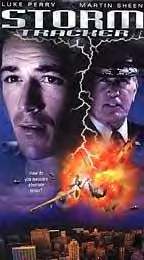
Plot: Only one man stands against an Eee-vil military plot to control the weather. It’s 1992. An Air Force plane approaches a cloud front off the Florida coast. Under directions from a command center it fires a missile, delivering a piece of equipment into the mass. Said gizmo shoots out CGI light effects and (very) suddenly major storm activity begins. Under the orders of General Roberts (Martin Sheen – hmm, Martin Sheen playing a military figure in a B-Movie…wonder if he’ll be a bad guy?), the plane is ordered to increase the unit’s power. Something goes wrong and they lose control of the device. Moreover, a spontaneous level-five hurricane is now heading towards Miami. Because the project is a (surprise) Black Ops one, Sheen refuses to ask for outside assistance. Leading one to wonder how ‘secret’ a spontaneously appearing hurricane system is. Instead, Roberts orders the control plane to reacquire the unit manually. This leads to the destruction of both the plane and its crew. Following this, the General orders "Q-5 Security Measures" to be put into effect. (Wow!) This results in the control station being disbanded. Soon we’re watching stock footage hurricane footage with ‘news report’ and Ah-ah music overlays, detailing the carnage wreaked by the storm. It is, we learn, the most financially devastating ‘natural’ disaster ever. We segue to the present, circa 1999. The aptly named meteorologist Rob Young (Luke Perry !!) is teaching a collage class. He’s explaining that since 1992 – get it? – there have been a rash of historically unprecedented "killer storms." Terms like "global warming," "El Nino" and "oceanic surface warming phenomenon" are tossed around to typically vague effect. [A note on Perry. Like many actors of his generation – call it Christian Slater Syndrome – he remains a callow figure even as he ages. I have my doubts he’ll be able to hold the screen opposite a veteran hambone like Sheen. Which is a problem, since he’s the film’s protagonist.] The most puzzling aspect of the storms, however, is an unidentified heat burst recorded in each directly before the systems ran amok. Personally, I find that idea that anyone, even an Evil American Military Figure, would spend his time creating one horrific hurricane and typhoon after another somewhat unrealistic. And really, how could you hope to keep such a thing a secret? Hasn’t anyone noticed the Air Force cargo planes flying into each system right before the storms occur? Young, wearing a Hawaiian shirt and driving the inevitable classic Mustang convertible -- the car of choice for ‘hip’ TV-movie heroes -- arrives at a small airfield. There he meets his Obligatory Deadmeat Sidekick, or so I’m guessing, who is inevitably named Scotty. Oh, well, at least he doesn’t have a bad Scottish accent. Soon they are flying a small plane into some clouds, trailing what appears to be an updated version of the storm-creating doohickey. (??) I mean, it even has CGI light beams coming out of it. However, since Perry is our Good Guy, I’m going to assume that his device is designed to do the opposite of Sheen’s: i.e., stop or diminish storms. Anyway, their route takes them into restricted airspace and they are radioed to leave. Raising the following questions:
Sure enough, Perry’s device is being used to deflect the storm. ("We’ve got control of the storm!" Scotty yells, so that we ‘get it.’) In other words, an underfunded college teacher/meteorologist has created a storm-controlling device. Given this, it’s, uh, somewhat surprising that Young hasn’t yet figured out that perhaps someone else has too, and is in fact creating the storms he’s so concerned with. Also, if creating these things were so simple, wouldn’t about every country on the globe have one of these by now? Or at least as many as have, say, nuclear weapons? Anyhoo, Our Heroes’ triumph is cut short when a much larger Air Force plane nearly collides with them. Following this, Perry lands his craft. He and Scotty continue to celebrate, however, until an FAA official appears and demands Perry’s pilot license. The fellow tears it up – Young ignored the ‘restricted airspace’ warning, remember – which I don’t think amounts to due process. He warns Perry that he’ll be arrested if he ever pilots a plane again. (Plot point! [Future Ken: Or so you’d think. Actually, Young’s ability to fly a plane never factors into things again.]) Next, right on cue, Perry has a run-in with Conway. Conway is one of those Stifling Bureaucratic Nerds (SBNs) that are always hassling Maverick Heroes. We know right off they won’t get along – Conway sports a bad haircut, dork glasses and is wearing a dress shirt and tie. This is in direct contrast to Young and Scotty’s laidback attire, like their Hawaiian shirts and the baseball cap Young wears with the bill pointing backward. "I’m tired of your flagrant disrespect for university policy," Conway tells him. I think SBNs have that line imprinted on a little card, like the ones cops carry with the Miranda warning. In any case, and somewhat inevitably, he pulls Our Hero’s funding. (SBNs always have this power, oddly enough.) He notes that Young’s risk-taking is sure to get someone hurt eventually. Perry counters that Truth Seekers – which, naturally, he is and Conway isn’t – have to take risks to do what they have to do, yada yada. Hmm, I know we’re supposed to be siding with Young here, but Conway’s actually making a lot more sense. If that Air Force plane had hit their craft -- after, remember, they ignored a restricted area warning -- not only they would have died but the crew of the larger plane as well. Moreover, if Young’s going to muck around with weather control, I’d feel better if he followed all the normal experimental controls and protocols while doing so. (Of course, we know that Evil Guys are doing the same thing, so Our Hero’s methods are ‘proven’ right, even if there’s no reason for him to suspect that this is the case.) Anyway, Young is now sans funds. You know, I’m pretty sure that some commercial concern or other university or the Government would right quickly fund research into a working weather control device. The idea that only this one grant keeps such a project afloat is patently dumb. They try to get around this obvious point by having Scotty rant about how no one will hire them after all the complaints they’ve accumulated. Young is more confident, however. As he says, "We’re good." Of course, that’s not what would get them funding. Again, look at the nature of their research. Hell, they’d have people lining up to throw money at them. It’s obvious that Young is secretly worried, too. So it’s lucky that within about two minutes a Mr. Holt of Zephyr Weather Dynamics shows up and offers him a job. (I can see the commercial possibilities of a weather control machine, obviously, but what does a ‘weather dynamics’ company do.) Now forgive me if I seem cynical. Still, wouldn’t it be a complete shock if ZWD was a front for Sheen’s experiments, and Perry found himself working for *gasp* the Bad Guys? Perry takes the job, but Scotty refuses, not wanting to work for THE GOVERNMENT. Which is weird, because Holt represented himself as working for a private firm. Ah, well, BIG BUSINESS, THE GOVERNMENT…c’mon, they’re just different labels for THE MAN. (Although I have to wonder who Scotty thought would be exploiting the technology after their research was released?) We also learn that Perry’s new job is taking him to Los Angeles. Where, coincidentally enough, THE LOVE OF HIS LIFE THAT GOT AWAY now lives. Uh, oh! With both of them living in a small burg like that, they’re bound to bump into each other! (Ever notice how these old boy and girlfriends from the past never prove to be married with kids or anything?) Zephyr’s headquarters prove to be on a military base. (Clever way to camouflage a top secret Black Ops project, eh?) Perry doesn’t seem to be surprised by this, though, which didn’t make much sense to me. Whatever. Holt meets him and starts rattling on about security protocols and classified materials and such. I assume this is somehow meant to be inherently sinister, because it’s against the Scientist’s Code to have secrets ‘n stuff instead of freely exchanging information for the Good of Mankind and so on. Young meets with General Roberts, who wears his Avuncular Face. He plays dumb and asks Perry to explain his research. This is a classic set-up for exposition, with Perry’s answer meant to fill in the audience as he answers the question. However, since the result is a thick wad of silly technobabble, I really didn’t see the point. In essence, his device works as a "storm magnet," allowing for storms to be redirected. Roberts’ eyes gleam with Evil Delight upon hearing this. Perry, of course, remains unaware of him employer’s Evil Intents, perhaps because the whole idea is so dumb. Young is next taken to meet Dr. Platt. I’m assuming that Platt, while the project’s head, will prove to be the standard Conflicted Scientist Who’s Concerned About the Project’s Evil Potential. This is at partly because Sawyer’s black, and black people are ‘good’ in the same way that military brass are ‘bad.’ So I’ll take a flyer and guess that Sawyer will eventually help Young work against the project in some way and be killed as penance for working on it in the first place. Yeesh, let’s get moving:
Summary: The Perfect Sh*T Storm! -by Ken Begg |