Another feature of... |
|
Another feature of... |
|
|
|
The Story
so far:
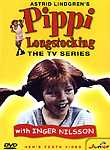
Pippi Longstocking (1968)
I have actual memories of Rio Lobo, but only vague images remain of Pippi in the South Seas, which was one of several movies that were stitched together episodes of a West German TV series based on Swedish author Astrid Lindgren’s popular children’s books. I do remember Pippi picking up something enormously heavy, which caused some pirates to run away from her. Anyhoo, when I saw a DVD of Pippi Longstocking TV episodes for rent, nostalgia compelled me to add it to my queue. Those are the dice you roll. I mean, if I succeed in renting / reviewing 40+ DVDs this month, some are sure to be stinkers. Here’s the first one. (Sadly, it’s not even a stinker in an interesting way.) Pippi Longstocking is basically akin to the Cat in the Hat. Two siblings, 10-year-old Tommy and 8 year-old Anna (Annika in the books) are growing up in a placid little European village. They lament the general lack of interesting things about, and wish especially that someone would move into the Big Old House, the abode next door that sports a horrendous yellow, pink and lime green façade. Someone with a child their age would be even better. Their wish is granted when Pippi, a young lass with freckles galore and carrot colored hair, worn parted in the middle and with twin pigtails projecting straight out from either side of her head, arrives in town and moves in. Strangely, the girl is sans parents, and accompanied only by Little Old Man, her white horse with black polka dots, and Mr. Nelson, a small monkey who wears a series of sweaters. Those two live in the house with her. This raises the ire of Miss Priscilla, a local busybody who wishes to have Pippi put in a children’s home. For some reason, in this dubbed version, she has a Scottish accent. Everyone else has an extremely flat English accent. The movie versions, apparently, were dubbed here, and the results were supposed to have been pretty comical (according to comments I’ve read from people who remember them better than I). Sadly, the vocal track as heard on the DVD is dull to a dire degree. Anyway, Pippi manages to stay on her own for two reasons. First, her missing father—who she says is a cannibal king in the South Pacific, although Pippi is given to falsehoods—has provided her with a satchel full of gold coins. These make her insanely wealthy. Let’s put it this way: If Pippi grew up to marry the rather more staid Richie Rich, it would be a billionaire’s version of Dharma & Greg. Moreover, aside from perhaps being the richest girl in the world, Pippi is also the strongest. Sadly, this fact doesn’t come into play much in the disc’s six episodes, presumably because special effects or wirework was too expensive to be utilized very often. Here her prodigious strength is indicated mainly by her pushing several grown-ups to the ground, although on occasion something (somewhat) more impressive is portrayed. The contents of this DVD are so bad I almost feel compelled to seek out the first book and the movie I saw and see if they are any better. The IMDb reviews of Pippi in the South Sea do indicate that it is better stuff. At a minimum, the film follows Pippi on an actual adventure in the South Seas with pirates, and forgoes her exceedingly tedious adventures in the little village. (The movie’s not on DVD, so I can’t rent it from Netflix to see.) Meanwhile, I grabbed a video from the children’s department of the library I worked at. Entitled Pippi Goes on Board, this is also a ‘movie’ culled from the TV series. However, from what I’ve read, the tapes retain the original, more humorous dubbing. I don’t intend to watch the whole thing, but I’m curious enough to at least give it a look. Besides, it lasts 83 minutes, while the DVD lasted nearly three hours. (Although the spirit was willing, the flesh was weak, and I’ll admit to leaning heavily on my DVD player’s fast forward button throughout the final three shows.) Anyhoo. The first episode introduces Pippi, who quickly becomes fast friends with Tommy and Anna. Pippi’s behavior is supposed to be outrageous, but even John Calvin would find her purportedly wacky hijinx drearily tame. The episode ends with our first indication of Pippi’s amazing strength, when she lifts Little Old Man up over her head in an appallingly crude effects shot. This garnered one of the few laughs the disc’s contents would earn. In the second opening, Pippi goes on a shopping spree. Given the teeny stores the village boasts, this proves somewhat like winning a million dollar spending spree in a Dollar Tree store. At a dress shop, Pippi puts on a big hat and dances around a little. "You can’t do things like that!" a shocked Tommy gasps. (That should give you some idea of the disc’s zaniness quotient.) Next Pippi pulls the arm off a dress manikin. When the shop owner complains, Pippi purchases it with a gold coin. The owner is ‘comically’ (but sedately) amazed by Pippi’s profligacy. Meanwhile, the arm will be used in about the tamest series of ways imaginable. Oh, and in the beginning Pippi is wearing shoes that leave red footprints behind. Don’t ask. Now, it’s obvious the show didn’t have much of a budget. However, that doesn’t explain the fact that at one point she hops on her right foot, and a bit later astounded (well, sort of) adults are pondering a series of left-hand footprints. Yeesh. Next they go to a candy shop. Man, I’m glad I live in America, as I’ve never seen such a lame supply of sweets in my life. There’s almost no chocolate, most of the stuff is just hard candy and various jellies and rollups, and you know you’re in a lame confectionary when a supply of popped popcorn is one of the treats. (Again, it’s possible they just couldn’t afford to buy decent candy for the scene, as they needed a lot of it.) The owner is shocked (albeit, mildly so) when Pippi orders 38 pounds of candy. "I’m not sure we have that much in the store," the woman replies, which is pretty clearly not the case. After collecting this bounty, Pippi steps outside and shares it with the village children. There follows several minutes of kids gobbling treats and smearing cream in and on their mouths, accompanied by the show’s typically discordant comedy music. Did I mention the music? It’s really quite dreadful stuff, and hours of it had my ears bleeding. Pippi next goes to a pharmacy and requests 8 quarts of "medi-cyne." This of course flummoxes (although in a minor fashion, admittedly) the pharmacist. However, we later see Pippi pouring several bottles of stuff into one big jug, so I guess the lawsuit culture hadn’t hit Germany or Sweden or whatever that point. Finally, Pippi buys all the children in town playthings from the local toyshop, which makes the town’s pathetic confectionary store look like Willy Wonka’s candyland. Screaming children run out with, mainly, a collection of cheap plastic Halloween masks, leavened with the occasional ball or doll. Then Pippi uses her manikin arm (so, so funny a prop) to conduct them all in blowing on these hideous clay bird-shaped whistles. The village’s comical cops, Kling and Klang—(one is really tall and one really fat, we’re told, except that the fat one isn’t)—mercifully run up and shoot them all to death. Well, no, sadly, they didn’t, except in my happy, happy dreams. The next show is entitled "Pippi Is Looking for Things." Sadly, a script wasn’t one of them. Pippi waters flowers in the rain, because it’s oh-so wacky and not a thing a dull adult would do at all. Then she goes to a party held by Tommy and Anna’s mom. Pippi further shows her zany unbridled personality by grabbing a whole lot of cookies and eating the frosting off some cakes with her fingers. Then she steps outside to deal with some bullies. One threatens to beat her up, but she’s Pippi, and she tosses him up into a tree in a bad effects shot. Then she scrunches up her face and slowly stalks toward his sidekicks, who back away, and we cut back to Pippi, who steps forward some more, then back to the sidekicks, who back away another bit, and so on. I didn’t actually time this, but I think it went on like that for about an hour and a half before the sidekicks all ran away. I also suspect this was accompanied by more bad music, since I noticed I had blood puddling in my ears at this juncture. Pippi then returns to the party, only this time she bounces around uncontrollably and breaks most of her hostess’ china and spills coffee and tea and food everywhere. Seriously, look into that Ritalin thing. Fourth Show:
Fifth Show:
Last episode!!!
To be completely fair, a small kid might adore this stuff, and if time hadn’t been a factor, I could have lessoned the pain by watching the disc over a number of days. But it was and I didn’t. Ken’s Rating: 2 out of 10. [Postscript: I did watch some of the video mentioned above, and there is a noticeable improvement. The dubbing is the American stuff, and its at least much less dry than the listless British dubbing. Anna is Annika again, and for some reason, the kids sometimes sound like they’re from Brooklyn. (!) More important, the film opens with Pippi’s dad sailing off in his ship. (I’m thus assuming these episodes directly follow the ones that made up Pippi in the South Seas.) Just seeing the ship sail off provides evidence of the adventurous vistas that make up Pippi’s life, which should include more than buying wacky—although not really that wacky—amounts of candy. Oops, spoke too soon. I’m not sure which continuity is correct—probably that on the DVD—but this ‘film’ contains at least some of the shopping spree stuff, as well as some of the Fun Fair visit. This will actually be interesting, to see if this material is handled better here. And after a short bit of watching, the answer is…yep. First, the movie compilations wisely radically edit down the often excruciatingly long length of some of the kid’s more tedious antics. That can’t help but improve things immensely. Second, they edit things out of order, which helps to break up the boring parts. Here the shopping stuff is broken up with the stuff where Pippi throws darts better than the sibling’s Pop. Then there’s the (mercifully about 80% shortened) sequence of the kids flying kites, and so on. This actually serves as a textbook example of how to rework dubious material. Seriously, it’s night and day. Almost as important, the weirder music is replaced with a much better score. In any case, I would easily stick with the videos until the American dubbed movie compilations come out on DVD, should they ever. I would also still push Pippi in the South Seas as probably being the best available version of the show. You could always, of course, start with the books, which I’m sure have retained their charm. By the way, a note to Kling and Klang: The crooks might have more trouble getting out of jail if you stopped leaving saws in their cells. Also, I have to report that Pippi has the worst safe gun handling habits since Lt. Harper in Plan 9 from Outer Space.]
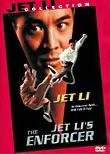
(Jet Li’s) The Enforcer (1995)
First off, I pop in the DVD. Good news: The movie is letterboxed. Essential, really; you can’t clip off part of the image in a movie where the characters are leaping all over the screen. Bad news: It’s dubbed into English. The dubbing isn’t absolutely farcical, but really, it’s a DVD, so there’s no reason not to provide the Chinese language track(s). That’s especially true in this case, as they had already decided to provide English subtitles. I was also disappointed to see that the film was set in contemporary times. Sure enough, this meant it was yet another ‘undercover cop amongst super-violent criminals’ movie. I think I was spoiled by seeing Jet Li’s historicals first, including the Once Upon a Time in China movies, and particularly his superlative Fist of Legend, which is probably my favorite martial arts movie. I just don’t enjoy the present day stuff nearly as much. Jet Li is Kung Wei, a cop deep undercover in one of the Chinese provinces. He’s so undercover that even his sickly wife and 10 year-old son, Johnny, don’t know he’s a cop. Of course, his dual life always keeps him from being there for his son, a budding champion Kung Fu master. Wei’s boss sends him to Hong Kong to break up an ultra-violent gang led by the, shall we say, flamboyantly eeee-vil Bo. Wei is upset by this news, because his wife is becoming increasingly ill. The only thing that helps her even temporarily at this point is ant soup, which is exactly what it sounds like. There are several scenes of young Johnny dutifully collecting ants for this. Ick. Needless to say, Wei does take the assignment. To establish his cover, he is arrested and a break out is arranged, during which G-Dog, a member of Bo’s gang, is sprung as well. (In the film’s most shocking moment, Wei matter of factly kills a couple of guard dogs with his kung fu. I can’t imagine that scene in an American film.) G-Dog is the dumb guy who proves too goodhearted to follow Bo’s lead for long. Bo, meanwhile, is one of those guys who double crosses and murders everyone who makes deals with him, which makes you wonder why anyone would continue to do so. Wei participates in a violent gang rubout/robbery in a fashionable eatery. During this he kills several rival gang members. This is a staple of Chinese cop movies, and man, I guess police officers over there have a lot more leeway than the one’s here. However, on the scene is supercop Inspector Anna Fong. She offers herself as a hostage for Wei so as to protect the bystanders. When the moment presents itself, she tries to capture Wei, but nearly falls to her death in doing so. Wei saves her before escaping, much to her confusion. It’s that kind of characterization, in which crooks shouldn’t save cops, as if they were members of rival sports teams. Anna tracks Wei’s identity down, and heads to his home province to gather more information on him. His secretive police boss claims no knowledge of him (typical bad movie plotting), so Anna goes to his home and presents herself as Wei’s colleague. There she begins to suspect that Wei is more than a common criminal, apparently just because his wife is nice and she likes his kid. Well, the wife kicks off, and because they’ve become close friends over the last, I don’t know, two days to two weeks, Anna tearfully agrees to become Johnny’s guardian. (!!) This is the kind of movie logic where it’s OK for a beloved mother and wife to die, because Anna’s on hand to become an eventual replacement for her. I don’t know, there’s some good stuff here, and it’s certainly not a disaster by any means, but it’s not that great, either. Structurally, the script relies much too heavily on contrivances and coincidence. As well, there’s waaaay too much character stuff. This isn’t all necessarily horrible in itself, but it often has you wishing they’d just get on with it, especially true in the middle of the picture. Even with the characterization, moreover, there are several problematic areas. Johnny seems pretty emotionally untouched by all these events, including seeing his mom and an adoptive uncle die, and thinking his father is a criminal. All’s well that ends well, though, and like I said, things end with Anna ready to replace the wife, like a modular unit. Her sudden willingness to more act as Johnny’s guardian, meanwhile, is literally comical. I did like the fact that Johnny has this one very good young friend. At one point, the other mean kids try to stone Johnny (!), but his buddy jumps in front of him and takes the blows. However, their relationship doesn’t go anywhere, and ends on an abrupt sad note when Anna takes Johnny to Hong Kong with her. G-Dog’s shift from good guy to bad guy a little too easily. This only works because he’s a ‘type,’ and we expect him to do so. The characterization, is other words, is very simplistic, like that of Hollywood movies of the ‘30s. The film’s most off-kilter element, meanwhile, is Bo. He’s played so cartoonishly broad that he knocks the film off-balance whenever he’s onscreen. Considering how straight-facedly ‘dramatic’ the rest of the picture tries to be, with constant pathos and stuff, his antics were all the more bizarre. The rest of the gang members, meanwhile, are just faceless goons. Another problem is the rote manner in which Wei’s boss sends his undercover agent to Hong Kong, to participate in several spectacular crimes and shoot-outs, without bothering to alert the local police to his presence. What if Wei were shot by the cops during one of these jobs? That’s dumb enough, but when Anna shows up looking for information, he still maintains his ignorance. Wouldn’t it be better to bring her in, lest she screw up Wei’s assignment? The action scenes, as directed by veteran helmer Corey Yeun, are often choppily shot and edited. There’s some good set pieces here, but only in one did Li get to go all out. Several others, I felt, seemed oddly truncated. I don’t know, I want insane madness and constant action when I watch these Hong Kong movies. Actually, young Johnny has the best of the action stuff, including a hilarious bit where Wei swings him around on the end of a rope and Johnny Kung Fus a bunch of dudes. Even so, there’s something disquieting about seeing a dad and a cop allowing a ten year-old to fight beside them in deadly battles, not to mention seeing grown men try to cut a kid down with cleavers, even if he is an ass kicker. Meanwhile, Anna gets to show her (literal) chops as well. She’s played by singer/actress Anita Mui, who according to the IMDb is known as the "Madonna of Hong Kong". Ms. Mui appeared in more placid roles in some Jackie Chan movies, including Rumble in the Bronx and Drunken Master II. Here she’s allowed to strut her own martial arts stuff, and acquits herself nicely. Tragically, Ms. Mui died of cancer in 2003, at the age of forty. Still, I found it weird that Li was only sporadically given the opportunity to strut his stuff. It’s like going to see a Gene Kelly musical where most of the dancing is done by other people. The balance between Kung Fu and Gun Fu was also off, I thought. When you have an amazing acrobatic talent like Li, having him shoot people, even in amazing ways, seems a bit strange. By the end they need an obvious contrivance for why all the guys he fights aren’t armed, but since that’s what we want, we go with it. Tech credits are often rough. The stunt work, as you’d expect, is incredible (although a scene with Anna jumping through the window of a moving truck isn’t nearly pulled off), and the occasional use of wirework, as when Wei swings his son around, is obvious but enjoyable. However, the production obviously suffered from some budgetary constraints, and basic things like the lighting are often a bit lacking. You can see why these Hong Kong stars dream of coming to Hollywood to make movies. They certainly are slicker. However, our studios still obviously don’t have a clue what to do with guys like Li or Jackie Chan. The Enforcer might be a far cry from something like Fist of Legend, but it’s still a lot better than generic lame actioners like Romeo Must Die or Cradle 2 the Grave. Fans should keep an eye out, meanwhile, for Hero, a historical which Li returned to Hong Kong to make in 2002. It’s due for a limited art house run here in the states sometime soon. By the way, and I kid you not, here is the IMDb plot description for his next, American movie: "Danny the Dog (2005) This is the story of Danny (Jet Li), a slave who has lived his whole life without any sort of normal human education, with the mind and personality of a young child, with only one lesson learned: how to fight. Treated like a dog by his owner/boss, Bart (Bob Hoskins) which includes having to wear a collar, Danny has been raised to be a lethal fighting machine who fights in illegal gladiator-style fight clubs, where he earns lots of money for Bart as the undisputed champion. After a car accident that lands Bart in a coma, however, Danny meets a kind elderly blind piano tuner (Morgan Freeman) on the run because he knows secrets some bad guys don't want known, who uses music to teach Danny some things about the world and about being human..." I can’t believe they’re ripping of the friggin’ The Bride of Frankenstein here. It’s like the martial arts version of one of those awful ‘humanism’ movies Robin Williams keeps inflicting on us. Good grief, this guy only has so many more pictures in him. Somebody help him!! Ken’s Rating: 6 out of 10.
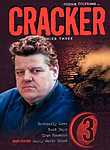
Cracker, Season 3, Disc
2
Everyone has an actor or two that they just like to watch. One of mine is Robbie Coltrane. While viewing this disc I reflected on how he must be pretty satisfied with his career. Admittedly, I mean in a ‘popular supporting actor / occasional minor leading man’ sort of way. Of course, the Brits seem to be fine with that, in contrast to the American conception of a ‘star’ as someone who must always play the leads. British actors seem to relish good small roles as much as good big ones. And hey, even the bad ones help pay the bills. Coltrane’s certainly come a fair distance since his early small roles in films like Krull and European Vacation (as Man in Bathroom). He displayed his dramatic chops in better films such as Kenneth Branagh’s Henry V—my favorite Shakespeare movie, by the way—and the great British crime flick Mona Lisa, which also contains a simply brilliant supporting turn by Michael Caine. Yet, as a star, Coltrane first hit the screens over here as Eric Idle’s costar in the old fashioned drag comedy Nuns on the Run. His next movie was The Pope Must Die (the title was later changed to The Pope Must Diet, after protests), and he seemed destined to be best known for being the latest in a line of fat guy comics. Not that there’s anything wrong with that. However, things got better after that. (Or, arguably, worse, since he wasn’t toplining movies anymore.) First he started getting showy supporting roles in several large franchises, including the Bond movies and, of course, the Harry Potter films. If his appearances as Hagrid don’t make him immortal, nothing will. Balancing his bigscreen supporting work was his recurring role as Dr. Eddie ‘Fitz’ Fitzgerald in the brilliant British TV series Cracker. (As a psychologist, he helps ‘crack’ tough cases and suspects.) This show was built around Coltrane, and he more than justifies the effort. Few actors, Andre Braugher, for instance, are fascinating when you watch them think. Coltrane is another, and during his frequent close-ups in Cracker, the shrewd intelligence shining through his huge, pudgy face is nearly hypnotic. I mentioned in my review of a Monk DVD that I was a big mystery novel fan. However, I pretty much stuck with the private eye and amateur detective stuff, having never really enjoyed police procedurals. Oddly, though, television seems a perfect medium for gritty cop series. Homicide: Life on the Street (starring Braugher in his trademark role as Det. Frank Pembleton—boy, if Pembleton and Fitz ever get together, watch out) is still probably the cream of the crop, but recent shows like The Shield and the now sadly cancelled Boomtown have kept the winning streak going. However, nobody out-gritties the Brits, not even Homicide, a show in which various members of the detective squad were horribly wounded, killed, committed suicide or were disgraced and kicked off the force. Three of them—three!--even committed murder over the years, and two of them got away with it. Even so, and as brilliant as that show was (and it is being released on DVD too, and is currently available through season five), it’s still not as dark as Cracker. Well, OK, there was that episode were Vincent D’Onofrio was crushed between a subway train and the platform, and his lower body was completely twisted around, and he was only alive because the train was pinning his vital organs in place, and when they moved the train…. I guess it would be fairer to say that Cracker is as dark, but in a more concentrated manner. Homicide lasted for seven years. Cracker had three ‘seasons,’ but as with most British TV shows, these were much more abbreviated than what we consider to be seasons. Although cable TV shows, like The Shield or The Sopranos, are now following more in the British model. If I remember correctly, the first two seasons of Cracker featured nine fifty-minute segments, which represented three, three-part storylines. The third season has one three-parter, followed by three two-parters, again for a sum of nine chapters. (At this point I’ve seen everything save the final two-parter. Since that was produced in 1996, and with Coltrane busy doing movie work, I don’t imagine we’ll be seeing Fitz again. Dammit.) Fitz is literally a larger-than-life character. He’s chronically broke (note how he wears pretty much the same two gaudy suits--one purple, one metallic blue, but otherwise identical--throughout the show’s run), drinks too much, smokes too much, gambles too much, quite obviously eats too much and cheats on his wife. He’s arrogant and a snob and a hypocrite. When his wife Judith cheats on him, after he’s conducted an affair with one of the detectives, he can’t forgive her or let it go. Later, his conflict with his "goody two-shoes" brother causes him to emphatically spurn a sizable amount of money they come into, although a bit later we notice him for the first time wearing new clothes. Nobody mentions this, and I’m sure some people wouldn’t notice it, but it’s a really nice little touch. Fitz is also a brilliant psychologist, much to the consternation of the police detectives he consults for, since many of them hate his guts. Even the less jaundiced ones consider him at best a necessary evil, since cops hate relying on outsiders. Yet he’s also almost superhumanly emphatic, even in regards to the most horrible murderer, perhaps because of his own flaws. He’s our hero. Nobody on the show is really likeable. Actually, that’s incorrect. Many of the people on the show are likeable, but almost no one is likeable all the time, and are very seldom admirable. Almost everyone does or says awful things at one time or other, and some to horrible extremes. Perhaps the only exception to this is Fitz’ son, Mark, a young man caught in the middle of his parent’s constant travails and rows. His balancing act between the two is sharply observed. I don’t want to get into many plot details, since the stories together form a definite arc involving the personal lives of Fitz and the various supporting characters. Let’s just say that life doesn’t prove to be a bowl of cherries for many of them. Also, I will highlight perhaps the show’s best storyline, which features a brilliant turn by guest star Robert Carlyle as a rampaging murderer. There’s little cheer to be taken from the series. The killers commit incredibly vicious crimes, but are themselves so damaged that you generally don’t take much satisfaction from them being caught or, on occasion, dying. About the best you can say is that they are often stopped from committing even more mayhem. There’s also a bit of political correctness on display—this is, after all, a European production. Perhaps the series’ only utterly unsympathetic killer is (surprise) a hypocritical right-wing Christian lay minister, while one of the most sympathetic is a homosexual driven to his crimes by a bigoted society. Still, this is a very minor complaint, and certainly the show is nowhere near as tiresome as the recent MI-5, a program so reflexively and stupidly leftwing that I had to give up on it after attempting to watch only two episodes. Cracker is quite simply brilliant stuff. Of anything I’ll review this month, if I could get some people to sample this show, I’d be happy. Trivia buffs might remember that in 1997 an attempt was made to adapt Cracker to American television, in the person of Murphy Brown’s Robert Pastorelli. I never saw the show, but I can’t imagine it was but a shadow of the original, especially since it ran on network TV. In any case, it was quickly cancelled. Ken’ Rating: 10 out of 10.
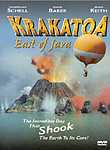
Krakatoa, East of Java (1969) On the 26th and 27th of August, 1883, the volcanic Indonesian island of Krakatoa massively erupted four times. The sound from the blasts was heard 3,000 miles away, and ash was blown as far away as New York City. Meanwhile, the seismic activity triggered a gigantic tsunami that reached heights of over 120 feet. Numerous neighboring islands were deluged, killing over 36,000 people. Krakatoa, East of Java is interesting (to a handful of people, anyway) as an immediate precursor to the blockbuster Disaster genre that began to thrive with the following year’s Airport. Although markedly cheaper, Krakatoa does somewhat more closely follow the template the genre would eventually mimic. The main problem with both films is that the disaster element is more a less a side story; and even a comparatively small one in Airport. The first fully successful model for the Disaster genre, and the movie that really kicked things off, would be 1972’s The Poseidon Adventure. As was often the case, today’s subject is more or less a glossy, overripe soap opera with a disaster stuck in. After a seemingly oddly extraneous intro featuring children at a Catholic boarding school located near the sputtering volcano Krakatoa, we, per tradition, move on to meeting our large cast:
The only other character of note is Danzig (J.D. Cannon), a former employee of Hanson who is currently among a group of convicts that Hanson has been forced to transport on the way out. Three guesses where that plotline goes. As things plod along (and along, and along, and along…more on that later), we get everyone’s Deep Dark Secret and/or Involving Subplot. Leoncavalleo begins a very innocuous sorta romance with Toshi. Rigby proves to suffer from severe claustrophobia (!!!), an unfortunately trait for a man who goes deep underwater in metal canisters smaller than a Porta-Potty. The winner, though, is Connerly. He not only secretly proves to have shot lungs, meaning his next dive could kill him, but he copes with the pain by chugging down bottles of laudanum, meaning, yep, he’s an opium addict. At one point he has about the least convincing hallucinogenic freak out since Jackie Gleason took LSD in Skidoo!, and assaults one of the Japanese girls. After that he’s confined for a time (a long, long, long time) to a crate that’s hoisted via crane up in the air, where it twirls around a lot. Yes, that’s got to be helping him get his head together, along with the lack of water and the cold turkey thing. The film was shot in the extreme widescreen
format of Cinerama, which basically conjoined three then-standard square
images. (This roughly square traditional format is why most old movies on
DVD aren’t ‘letterboxed.’) The opening credits emphasis this by
featuring three separate images running alongside each other. Yes, much like
how we get three Steve Guttenbergs at the beginning of Can’t Stop the
Music. One questionable idea was to show during this a montage of the
events that follow. This helpfully allows the viewer to know what is to
happen, and to only have to worry about seeing it played out at greater
length. The titular volcano has little to do with things until the rest of the movie is largely wrapped up. (When the eruption does start, it’s so entirely on cue that it’s hilarious.) In fact, you could have written it out of the picture entirely with little revision, although the result would be one monumentally boring melodrama. In the main, the upcoming destruction is occasionally augured by a staple element of the Disaster Flick: The Ominous Signs. The first is really just to have something ‘exciting’ happen before the plot gets going, and involves a sailor falling to his death while loading the diving bell. The rest are more to the point: Huge fireballs on seen erupting on the ocean horizon, allowing for an early display of pyrotechnics. (Hilariously, most everyone stares at this apocalyptic display in fear and wonder, and then shrugs and forgets about it after it ends.) A shrill, high-pitched sound is heard, seeming emanating from nowhere. Thousands of birds are seen swarming in the air. Hordes of dead fish appear floating atop the water. Finally, a dense yellow fog envelopes the ship. Luckily for Hanson, he has about the least superstitious crew in maritime history, since no one ever suggests he turn around. However, Laura is more intuitive. "It’s like a series of signs!" she frets at one point. Do tell. (This is the second funniest line in the film. The winner is when Giovanni attempts to chat up Charley after her lover Connerly attacks the Japanese girl, and remarks on how people get labeled. "Labels are for jelly jars!" Charley retorts hotly.) It’s not until nearly all the plot threads have been neatly tied up that the volcano finally does its bit. The proceeding nearly two hours largely consists of ridiculous melodramatics and some really inane ‘arty’ directing. The goofy personal travails are not helped in the least by the film’s musical score. This proves the very definition of overripe, booming out at any given moment to instruct us on whether what is happening is comic, tragic, or something in between. There are even brief but identifiable swipes from the famous score from 20,000 Leagues Under the Sea, which was not a good idea. Moreover, there’s the obligatory pop ballad that plays over the soundtrack at one point ("Java Girl"). Then, in a truly weird scene, Charley begins singing for Connerly in their cabin, and is suddenly accompanied by unseen instruments. Musical numbers were often put into movies of this time, but usually they attempted to provide a rational explanation for where the music was emanating from. Here’s it’s like something out of My Fair Lady. Well, OK, maybe not. Another downside is the often ludicrously ornate direction provided by Bernard Kowalski. Mr. Kowalski had a long career in television, and worked on many famous series over many decades. Sadly, the last show he appears to have worked on was the X-Files knock-off, Baywatch Nights. It’s worth noting, moreover, that two of his cast here are best known for their TV work. Brian Keith, of course, was the dad on Family Affair. J.D. Cannon, meanwhile, was the perennially sour police captain boss on McCloud. Despite his TV work, however, Mr. Kowalski’s real claim to fame was in helming the classic B horror movie Attack of the Giant Leeches. I’m not sure whether Mr. Kowalski decided to employ such distracting visual gimmicks as the series of truly laughable subjective camera angles (two characters washing their faces are shot from the bottom of the water bucket!) because this was his biggest theatrical picture, or because he realized how terminally dull and silly the script was. For instance, when the balloonists ascend and Rigby dives to look for the sunken ship, both are given supposedly dramatic near-death scenes, ones that spin out, as much else in this film, for way too long a time. Also, I don’t know who ordered the camera to be pointed right between the legs of the Japanese girls as they scissor-kick their way underwater, but geez. The film originally ran a brutal 136 minutes. After a poor response, it was re-released in much hacked-down 101 minutes version. The bare boned DVD presents the original long version. Usually, I applaud that sort of thing, but perhaps not here. The ‘character’ scenes are interminable, and are largely unrelieved until the eruption occurs circa the two-hour mark. That leaves only one question: Does the disaster stuff justify the rest of it? I’d say, mostly, yes. Once the volcano goes up, there’s a solid ten-minute scene where Krakatoa spews out flames like a roman candle. Meanwhile, Hansen’s ship attempts to sail clear as massive lava bombs smash through the deck, setting fires. I have a 36" TV set, and I thought a lot of this looked pretty spectacular. The work here, of course, is via miniatures, and I just love that sort of stuff. Some of it is less than believable, but you can easily imagine the effort put into shots like this, and I can’t help but appreciate it. Others, I suppose, may not be able to get past the ‘believability’ aspect, but for me, I was all but hypnotized. The subsequent tsunami has its good and bad parts. The film’s bluescreen effects are pretty primitive—this is also true during the diving bell sequence— and the model work for the buildings on the inhabited islands inundated by the giant wave is not among the film’s best stuff. Even so, there are some pretty cool moments of the gigantic wave cresting. In the end, I can only recommend the film to those feel a need to see every most every disaster movie out there. There are some completely worthless ones out there (cough, cough, City on Fire), and although I wouldn’t put this one in that category, its up to others to decide whether they should just fast forward to the good stuff. Ken’s Rating: 5 out of 10.
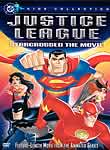
Justice League: Starcrossed
The Movie (2004)
There’s no better measure of how far comic book cartoon shows have come than to mark the differences between the puerile ‘70s Saturday morning kiddie mainstay The Superfriends with the recent Cartoon Network Series Justice League. I won’t say the new series is shockingly good, but the show that really knocked the socks off animation and comic book buffs was the earlier Batman: The Animated Series. That not only remains the greatest cartoon series ever, at least in my opinion, but is also what I consider the single, definitive version of the Batman universe. When you can build a fascinating episode around the Clock King, you know you’re doing something right. The main two creative forces (as far as I know) behind that program, artist-producer Bruce Timm and writer Paul Dini, went on to work on the subsequent Superman: The Animated Series, and then Justice League. These have been fine shows, but Batman: TAS so elevated the bar that neither can be called knock-outs. Don’t get me wrong, both were / are impressive shows. However, both suffer from key disadvantages in comparison to Batman: TAS. First, Batman: TAS was…well, first. Again, it came out of nowhere and just set a new standard for comic book adaptations. There’s a reason there’s a phrase in the lexicon for ‘sophomore slump." Actually, that’s unfair. Superman: TAS was a surprisingly good show, given the handicaps it faced in regards to its predecessor. First, Superman is harder to write, given that he’s a bit of a goody two-shoes. Second, there’s the inconvenient fact, from a dramatic episode, that Superman’s so powerful. Nearly every show had to at least suggest he was in peril, and that’s no easy task when your subject is the Man of Steel. (Part of the show’s solution was to make their Superman rather less powerful than most other incarnations of the character.) Third, and most important, Superman’s rogue’s gallery is nowhere near as good as Batman’s. Indeed, save Spider-Man, no other comic book character’s comes close. Despite this, Paul Dini and the writers did a surprisingly good job with such characters as second-stringers as Toyman and Titanto the giant ape, and really milked the better villains, including Parasite, Bizarro, Metallo (great job on Metallo) and especially Darkseid. And at times, the show was brilliant. The comic episode with Superman casually disposing of interdimensional imp Mr. Mxyzptlk might be the single finest episode of any of the various shows. The wisest decision Dini and the other showrunners made was to go with the classic early Mr. Mxyzptlk, when he was essentially a little bald man in a old fashioned suit, including vest and spats, and wearing an undersized derby hat. Their second masterstroke was hiring Gilbert Gottfried to play the character. I always found Mr. Gottfried an extremely annoying actor, which made him absolutely note-perfect for Mxyzptlk. That show lasted on the Warner Brothers morning block for a year or two, and was followed by other well-done shows like Static Shock and the ambitious Batman: Beyond. (There’s also currently a Teen Titans series, but it hasn’t really won me other yet, especially the Japanese anime-style animation.) Then, a few years ago, the Cartoon Network commissioned a new Justice League program. Since I don’t have cable—I’d waste so much time I’d have to shutter the site—I haven’t seen the vast majority of the shows. It doesn’t help that Warner’s is following a simply moronic release pattern for the show, and its predecessors. A few double episodes have been released, including our current subject. However, this release pattern is shooting their sales in the foot. A similar pattern was used for Batman: The Animated Series. At first loose discs were featuring generally three episodes were put out. I bought three or four of these, since, as I noted, I’m a big fan of the show. Needless to say, however, I was annoyed that they just didn’t put out the show in season sets. Which is, just this month, what they did. The problem is that I already blew a fair amount of money buying the loose discs, and now if I want the rest of the first season, I’ll have to blow cash on numerous shows I already own. Needless to say, this doesn’t make me a happy consumer. It’s obvious what they’re doing. They release a few separate discs, just to get an idea of how many units they might sell. Apparently the Batman discs did well, so they released an entire season set. However, I’ve yet to buy that, because I’m still pissed about the double dipping. (And frankly, I belatedly started a retirement account lately, and my DVD budget is no longer nearly infinite.) I’ll probably pick it up eventually anyway, but I won’t be happy about it. Meanwhile, they presumably are doing the same thing with the Justice League discs. Well, while I’d buy a season set, assuming the price was reasonable, there’s no way I’m getting burned like that again. Moreover, I’m sure I’m not the only one taking this stance. This means the sales of the individual discs are likely going to be artificially depressed. If they then decide those sales figures indicate low consumer interest, then they’re morons. It’s just that the hardcore fans don’t want to toss their money away. [Moreover, the episodes they’re released aren’t even the ones we really want to own. Where are the ones featuring the Injustice League (aka, the updated Legion of Doom)? The discs I’ve rented have featured good, but not great, shows. That’s just dumb.] However, not having to buy every disc on the market is why I subscribe to Netflix. The essential problem with the Justice League is finding stories that justify assembling DC’s most powerful heroes. (Who are, it should be noted, rather more powerful than their Marvel analogs—usually.) One way they get around this is by centering stories on individual characters, like Green Lantern or Wonder Woman. Second, the stories have to find roles for such diversely powerful characters ranging from Superman, Green Lantern, the Flash, Martian Manhunter and Wonder Woman on the uber side of the scale, and down to Hawkgirl and Batman. Sadly, they generally just cheat. Superman and the Flash have suffered power downgrades and/or weird fluctuations (in one episode the Flash can barely keep up with a speeding truck, in others he races around the world in the blink of an eye). This, of course, is for drama’s sake. Another technique has been to upgrade some of the lesser characters. Several years ago DC decided to make Wonder Woman a female analog to Supes. Her strength was immensely enhanced, and suddenly she could fly. I guess this was someone’s idea of ‘feminism,’ but all it really did was diminish Superman. I liked the universe when he was uniquely powerful. Now there are dozens of guys running around who seem like they could kick his ass. In the cartoons, meanwhile, he’s been reduced to basically a Hulk or Thor level of strength. Again, I understand the dramatic rationale for this, but I don’t necessarily like it. [As I’ve written before, I remain at heart a Marvel man. I feel the same way about the Marvel universe. There was in the early days of the Marvel Universe a terrific pin-up of Spider-Man holding aloft a platform, upon which stood the small number of heroes stronger than him: Thor, Hulk, the Thing, Namor and Iron Man. I kind of prefer those uncluttered days.] Hawkgirl, meanwhile, has been given a super-energy mace. In effect, this grants her super-strength, in that her mace can now smash through about anything. In effect, except for the Flash and Batman, everyone’s powers are too similar. (Actually, Superman can also match the Flash’s speed, although usually they ignore this.) Every member of the team, save Flash and Batman, can fly. Every member save them functionally has super-strength (although, as noted, Hawkgirl’s is artificial—as is Green Lantern’s—and limited to smashing things). Of the characters possessing actually personal super-strength; Superman, Wonder Woman and Martian Manhunter and occasional guest star Aquaman—who has basically been rewritten to be a Namor clone—they don’t do much to differentiate one characters as being stronger than another, in the way that, say, Spider-Man or Luke Cage would be less powerful than the Thing, much less the Hulk. Let’s briefly run down the main characters, save Batman and Superman, who are largely the same characters as in their respective personal series.
Not having seen any episodes from the second season prior to this, I must say that the episodes making up Starcrossed indicate that all the show has begun firing on all pistons. This was easily the best of the three or four short story arcs I’ve managed to see. The Justice League is keeping an eye on an international peace conference being held in Washington. However, an attack comes not from terrorists but from a spaceship. This comes near to destroying the hall were the delegates are meeting when the ship is destroyed by another, larger ship. To Hawkgirl’s amazement, this is a ship from her homeworld of Thanagar. The Thanagarians have long been at war with the reptilian Gordanians, a race that plunders planets. Having learned that Earth is next to be attacked, and that its defenses are woefully inadequate to beat off the advanced species, the Thanagarians have arrived to offer their aid. Hence the timely arrival of their armada, commanded by Hro Talek. Meanwhile, the other League members are shocked to learn that Hawkgirl’s presence on Earth has actually been a military assignment, and that she has been covertly providing Thanagar with information on our planet. She and the rest of the Thanagarians insist that their intentions are friendly, but many remain wary. Green Lantern, however, is in for an even greater blow. He and Hawkgirl have somewhat recently, and secretly, become lovers. (The exact nature of their relationship is slyly implied when, during a private conversation, she refers to "that Chinese restaurant near your apartment.") However, it turns out that Hro Talek is not only her commanding officer, but is also her fiancée. In the end, the governments of Earth decide they have no choice. The Thanagarians move in and begin constructing in the Middle East a massive forcefield generator, one that will project a shield that will protect the planet. Despite the apparently friendly nature of the Thanagarians, however, some remain suspicious. Among this group, of course, is Batman, and he infiltrates the Thanagarian control center during a tour of world leaders. (As a nice wink to the audience, he is disguised to look like Alan Napier, the actor who played Alfred the butler on the Adam West Batman series.) He indeed learns that the aliens are up to something, but is captured after radioing Wonder Woman at the Justice League Watchtower satellite. She relays the warning to the other League members, who are onsite aiding the construction project. However, the Thanagarians anticipated this eventuality and prepared for it. The Watchtower is overrun by an attack squadron, and special weapons are deployed to take out the others. All faith is now lost in Hawkgirl, who has provided the data on their respective weaknesses. Soon the Leaguers are imprisoned. Green Lantern’s ring has been confiscated, Superman languishes under a lamp that replicates the light of a red sun (under which he is normally powered), Wonder Woman is (I think) bound with her own golden lasso, etc. Despite these precautions, of course, the Leaguers do eventually escape. With the Thanagarians now controlling the Earth and searching for them, they decide they must blend in with the general populace. There follows a great scene when the Flash replies that he isn’t yet ready to reveal his secret identity to the other members. Batman casually tosses out not only Wally’s name but his own and Clark’s, having sussed them out over the years. (Actually, we saw he and Superman learn who the other was in the superlative World’s Finest movie.) This is entirely in keeping with this incarnation of Batman, who is given to nearly obsessive information hoarding due to his constantly preparing for any possible contingency. [Secret
identities are an increasingly problematic concept in the modern world. A
nice parallel to Batman’s stealthy uncovering of his fellows’ identities
can be found in Marvel’s revisionist ‘Ultimate’ universe. There, the
various superheroes discover over time that superspy Nick Fury—who is
basically an analog of the version of Batman we’re discussing, were he
given to working for the government—has systematically uncovered nearly
all their secrets. Note too how much trouble the Spider-Man of the recent
movies has had keeping his identity from people.] As I said, this is easily the best arc of this series I’ve yet seen. There are still problems with the character’s power levels. At one point, Wonder Woman, who in an earlier show went toe-to-toe with Superman himself, has trouble beating off some Thanagarian soldiers. Even if these guys were ten times as strong as a human, this should be no contest. Later, however, there’s a much better scene where Superman, Wonder Woman and Green Lantern attack the Thanagarian mother ship and its fleet of defense fighters. This finally gives us an opportunity to see the characters portrayed at full strength, and its exhilarating stuff. This is exactly the sort of sequence that keeps forty year old comic book nerds like myself fascinated with the superhero genre.) The upcoming third season of the show (which I guess follows directly after the events of Starcrossed) appears to be freshly retitled Justice League Unlimited, and will feature a much expanded roster—supposedly upwards of 60 generally more obscure characters—taking turns backing up the core group. This sounds a lot more along the line of Marvel’s venerable supergroup, the Avengers. Speaking of, Marvel could really use a Paul Dini or Bruce Timm of our own. Marvel cartoon programs have ranged from the pretty good (the original, pre-Bashki season of Spider-Man, the two most recent Hulk series) to the awful (the downright hideous and thankfully short-lived Avengers Forever; the Fantastic Four series where the Human Torch was replaced by, gack, Herbie the Robot; the UPN Iron Man series). Recently there’ve been some more decent ones (Fox’s X-Men and Spider-Man cartoons, for instance), but nothing even close to the level of the DC shows. It almost makes me weep. Sadly, the character that would most benefit from the Timm back-to-basics approach would be Spider-Man—again, largely because of his fabulous rogue’s gallery—but he’s also the most overused Marvel character. The Fantastic Four would probably be next. One problem, of course, is with the rights to so many characters owned by different companies, it’s hard to have, say, Spider-Man appearing on a figurative Avengers cartoon. The best hope Marvel fans have right now, cartoon-wise, at least, is an uncoming series of 10 DTV animated ‘movies’ (each about an hour in length, apparently) that are being produced by Lion’s Gate at Marvel’s direction. The first, due out in 2006, is supposedly to be based on the revisionist ‘Ultimate’ Avengers. These could be smashing, but again, you need the right person at the helm. I’m keeping my fingers crossed. Ken’s Rating: 8 out of 10.
-Review by Ken Begg |
|||||||
|
|